

MONDAY SALE! • EXTRA 10% OFF + FREE SHIPPING DEAL | CODE: MONDAY10
MONDAY SALE! • EXTRA 10% OFF + FREE SHIPPING DEAL | CODE: MONDAY10

Back to school wall art works best directly above the desk, centred on the desk rather than the wall, with the bottom edge 10 to 12 inches clear of the surface. Choose one calm piece for the study wall and keep anything busy or slogan-based out of the child's direct eyeline.
A study space is a working environment that happens to sit inside a bedroom. The two want different things, and the mistake is decorating the desk corner as though it were part of the room rather than a place where somebody concentrates.
A desk wall should be quiet. Whatever hangs there is in view for every hour of homework, and busy imagery competes for exactly the attention the work needs. The rest of the bedroom can be as characterful as the child wants.
So treat the desk wall as its own small project: one piece, sized to the desk, calm enough to sit behind a task without pulling focus from it.
Children sit lower than adults and the desk itself sets the reference, so the standard 57 to 60 inch centre does not apply cleanly.
| Age | Typical desk height | Art centre from floor | Gap above desk |
|---|---|---|---|
| 5 to 8 | 22 inches | 44 to 48 inches | 10 inches |
| 9 to 12 | 26 inches | 48 to 52 inches | 10 to 12 inches |
| 13 and up | 29 inches | 52 to 57 inches | 12 inches |
Width follows the usual proportion: roughly two thirds of the desk. A 40 inch desk takes something around 26 inches across. Going wider than the desk makes the working area look smaller than it is.
Allow for a monitor or a laptop stand before drilling. A screen can reach 18 to 20 inches above the desk surface, and art hung without checking ends up half hidden behind it.
Landscape work with distance in it suits a study wall for the same reason it suits an adult home office: it gives the eyes somewhere to travel between tasks. Keep the contrast moderate. A single piece also leaves room for the things that inevitably accumulate on a desk wall, timetables, notes and photographs, without the wall becoming chaotic.

Geometric wall art suits a teenage study space because it reads as grown up without being adult. Clean shapes and a restrained palette sit well beside the clutter of an actual working desk, and they do not carry the childhood associations that a younger scheme does.
Motivational wall art is the obvious back to school suggestion, and it works better on the wall you see when entering the room than on the wall faced while working. A message registers on arrival. In the eyeline for three hours of homework, it becomes wallpaper at best and nagging at worst.

A study space a child had no say in is a study space they avoid. Give them the choice of subject within a sensible constraint, calm enough for the desk wall, and the room gets used. This matters more than any specific recommendation in this article.
Bright, busy or personality-led pieces belong on the other walls, where they are seen on entering and while relaxing rather than while working. That separation lets a bedroom be a bedroom without compromising the study corner. For younger children moving on from a nursery, nursery wall art subjects like animals and landscapes often transition well into a first proper bedroom.

Two children at one desk, or two desks in one room, changes the problem. Individually chosen art on adjacent walls turns into visual competition, and the room stops feeling coherent.
The workable approach is one shared scheme with individual touches. Matched pieces above each desk, same size and same height, with each child choosing the subject inside an agreed palette. The symmetry does the organising, and the individual choices keep it personal.
Where one desk faces a wall and the other faces into the room, treat only the wall-facing desk as a study wall. The other will need a different solution, usually a small piece to the side rather than anything directly in the eyeline.

Late August is when this job actually gets done, and there is a practical reason to do it before term rather than during it. A study space reorganised in week three of a term disrupts a routine that has just been established.
The useful sequence is to sort the desk position first, then the lighting, then the wall. Position and light determine what the wall can take. A desk moved under a window after the art is hung usually means moving the art too.
It is also worth revisiting the desk height each year. A desk and chair that fit a child in September rarely fit them the following June, and art hung to a previous year's eyeline creeps upward relative to the child until it no longer relates to the desk at all.

Desk lamps throw light sideways across a wall, which is the least flattering angle for anything hung on it. A lamp positioned to light the work will rake across a canvas beside it and exaggerate every bit of surface texture.
Position the lamp so its throw falls on the desk rather than the wall, or move the art far enough to the side that it sits outside the lit cone. In a room where the desk faces a window, remember that the wall above the desk will be backlit for part of the day and the art will read as a silhouette during those hours.
Gallery wrap canvas has a practical advantage in a study space: there is no glass to reflect a desk lamp or a screen back at the person working. A glazed frame directly above a desk will show the monitor in it, which is distracting in exactly the wrong place.
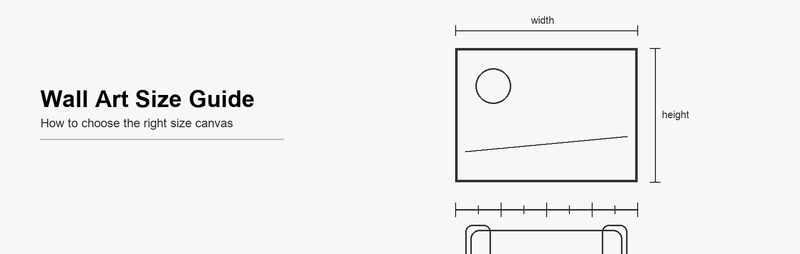
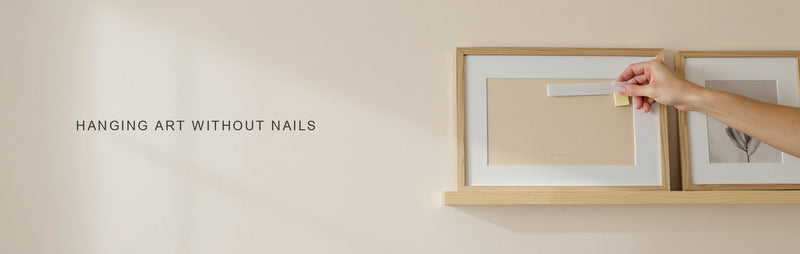
For general proportions see the wall art size guide, and the damage-free hanging guide covers fixings for rented rooms and for walls you would rather not drill.
For a lot of families the study space is not a desk in a bedroom. It is the kitchen or dining table, cleared each evening and set again for meals.
That arrangement does not want a dedicated study wall, and trying to create one produces a kitchen with a school corner in it. The better approach is to treat the room as the room it is and let the art serve the meal-time use, which is the dominant one.
What you can do is make the working position the one facing the calmest wall. If the table has one side that looks at a blank or quiet wall and another that faces a busy worktop, that is the side to set up for homework. It costs nothing and it is a bigger help than any purchase.
Where a permanent study spot is genuinely needed and no bedroom has room, a landing or a wide hallway will often take a small desk. Those positions have the advantage of a single clear wall and no competing use, and they are easier to make work than a corner of a busy kitchen.
Study spaces get outgrown faster than any other part of a child's room, and most of the cost of redoing them is avoidable.
Choose the art for the age above the one the child is now. A piece that suits a nine year old will look childish to the same child at twelve, where something chosen a little older grows into rather than out of. Landscape, geometric and abstract subjects all age well for this reason.
Keep the fixings flexible. Hanging one substantial piece rather than a grid of small ones means fewer holes and an easier change later. It also means the piece can move to a different wall when the desk moves, which it will.
Revisit the setup each August rather than each September. Doing it before term starts means the change lands during a break rather than disrupting a routine mid-term, and it gives you time to find the right piece rather than buying whatever is available in the first week back.
Quick answers
Lower than adult height, because the child sits lower. Centre the piece 44 to 48 inches from the floor for a younger child, 48 to 52 inches for ages nine to twelve, and 52 to 57 inches for teenagers. Leave 10 to 12 inches between the desk surface and the bottom edge, and check the monitor height first.
One calm piece with moderate contrast, directly above the desk and sized to about two thirds of the desk width. Landscape and geometric work both suit the position. Keep busy imagery and slogans on the wall the child sees on entering rather than the wall they face while working.
Yes, within a constraint. Give them the subject choice and keep the decisions about size, position and how busy the desk wall can be. A study space a child had no say in tends not to get used, and the constraint is what stops the room becoming unusable for actual work.
Shop this guide
Every collection this guide mentions. Each one opens on artwork printed to order on museum-quality canvas.
Pieces shown above
Every piece this guide shows, printed to order on museum-quality canvas.
Keep reading
Guides that pick up where this one stops.