






Art Styles List: What Each One Looks Like
An art style describes how a piece is made and how it looks, not what it shows. The styles that matter for wall art are realism, abstract, impressionism, minimalism, pop art, art deco, surrealism, line art and digital art. Each behaves differently in a room.
This is a working list for choosing something to hang, not an art history survey. Every style below exists in ranges we actually carry, and each entry says what it looks like and where it works.

Realism shows the subject as the eye sees it
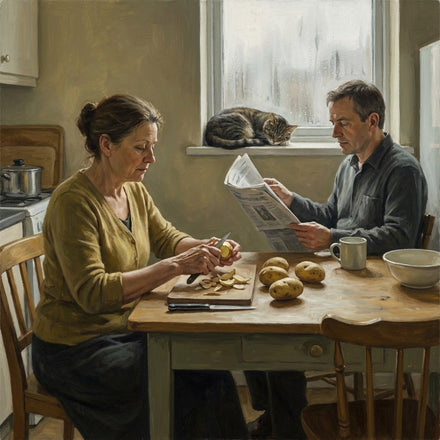
Accurate proportion, natural color, real light. Photography and photo-real painting both sit here. It is the most common style in wall art because a recognizable subject gives the eye somewhere to return to over years.
It needs size to work, because detail is the whole proposition and detail disappears when a piece is hung too small.

Abstract uses color and shape without a subject
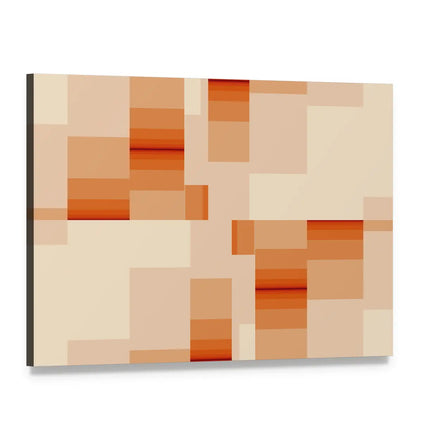
No recognizable object, just color relationships, gesture and form. Abstract is the most flexible style in a room because it carries no literal meaning to compete with the furniture, and it survives at smaller sizes since the composition is built from large shapes.
It is also the style most sensitive to palette. An abstract chosen for its colors either anchors a room or fights it, with very little middle ground.

Impressionism is light before detail
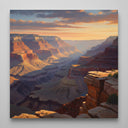
Visible brushwork, soft edges, color used to describe light rather than outline. Impressionist and impressionist-style pieces read as warm and unhurried, which is why they suit bedrooms and dining rooms more than workspaces.
They are forgiving on a textured wall, because the style is already soft and does not compete with the surface behind it.
Minimalism removes until only the essential remains
Few elements, generous empty space, restrained color. Minimalist pieces do the opposite of filling a wall: they need space around them, and hanging one inside a crowded gallery arrangement cancels the effect entirely.
This is the style that most rewards going one size larger than feels necessary, since the empty area inside the frame is doing the work.

Art deco, pop art and surrealism are the graphic three
Art deco means symmetry, geometry, metallic tones and strong repeating shapes, drawn from the 1920s and 1930s. Pop art means flat bold color, high contrast and imagery borrowed from mass culture. Surrealism means real things arranged impossibly, so the picture is legible but the scene is not.
All three are statements rather than backdrops. One per wall is the rule; two compete.
Line art and digital art are defined by their method
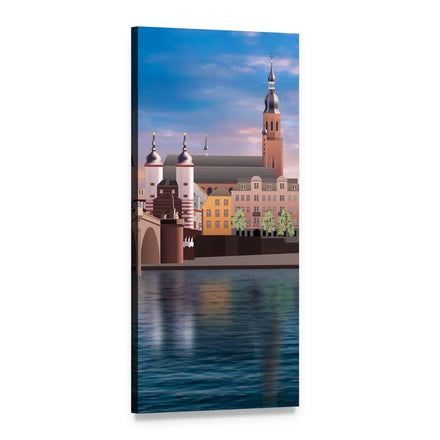
Line art strips a subject to contour, usually a single weight of line on a plain ground, and it is the quietest way to put a recognizable subject on a wall. Digital art is rendered rather than photographed or painted, which allows color and lighting that could not exist in a camera.
They sit at opposite ends of the same axis: line art whispers, digital art saturates.

What to browse
By style: Abstract Wall Art, Realistic Wall Art, Minimalist Wall Art and Oil Painting Canvas Art are the four widest starting points, and the style hub lists every style range in one place. The realistic wall art guide and the minimalist wall art guide go deeper on two of these.
Quick answers
Common Questions
What is the difference between an art style and a subject?
A style describes how a piece is made and how it looks. A subject describes what it shows. A mountain can be painted in an impressionist style, rendered digitally or photographed realistically, and those are three different pieces with the same subject.
Which art style is easiest to place in a room?
Abstract, in most cases. It carries no literal subject to compete with the furniture or the room's purpose, and it holds up at smaller sizes because it is built from large shapes rather than fine detail.
What does minimalist wall art need that other styles do not?
Empty wall around it, and usually a larger size than feels necessary. The empty space inside the frame is the composition, so crowding the piece into a gallery wall cancels the effect it was chosen for.
Can I mix art styles on one wall?
Sparingly. Realism and abstract ask the viewer to look in two different ways, so mixing them needs a deliberate reason. The graphic styles, art deco, pop art and surrealism, are statements and work best one per wall.
What is line art?
A subject reduced to contour, usually a single weight of line on a plain background with no shading or fill. It is the quietest way to put a recognizable subject on a wall, and it sits at the opposite end of the scale from saturated digital art.
Shop this guide
The collections in this guide
Every collection this guide mentions. Each one opens on artwork printed to order on museum-quality canvas.



Pieces shown above
The pieces in this guide
Every piece this guide shows, printed to order on museum-quality canvas.


Keep reading
Read next
Guides that pick up where this one stops.


