

FRIDAY SALE! • EXTRA 10% OFF + FREE SHIPPING DEAL | CODE: FRIDAY10
FRIDAY SALE! • EXTRA 10% OFF + FREE SHIPPING DEAL | CODE: FRIDAY10

Horizontal wall art is sized to the furniture underneath it, not to the wall. The working number is two thirds: a piece that spans about two thirds the width of the sofa, bed or sideboard below it reads as deliberate. Everything else, subject and ratio included, follows from that one measurement.

The two thirds rule says a piece should span roughly two thirds the width of the furniture it hangs above. Measure the furniture, multiply by 0.66, and shop by that width.
Worked through on the sizes people actually own:
The rule is a floor as much as a target. Anything under half the width of the furniture looks stranded above it, which is the single most common sizing mistake and the reason a well chosen piece can still look wrong on the wall.

The widest single canvas in the horizontal range is 48 x 32 inches. Every width past that comes from a multi-panel layout, not from a bigger single piece. That is the fact that decides most horizontal wall art purchases, and it is easy to miss until checkout.
The full width ladder, by layout:
Put that next to the two thirds numbers and the line falls in an obvious place. A 72 inch sofa is the last one a single canvas serves properly, at 48 x 32. An 84 inch sofa needs 56 inches, so it goes to a set. A 96 inch sofa needs 64, and the 82 x 42 inch 5 Star is what reaches it.
One trade to know before choosing: framing is offered on the single canvas, as Framed Canvas or Framed Print. The multi-panel layouts are canvas print, stretched over a solid wooden inner frame and ready to hang.

Width helps a subject that keeps going past the edge of the frame. It does nothing for a subject that sits in the middle.
Lakes and sunsets are the two largest subjects in this collection, ahead of mountains, rivers, city skylines and bridges. That is not an accident of stocking. Each of them carries a horizon or a span that uses the whole width.
A lake puts a level waterline across the frame and doubles it in the reflection. A mountain range earns the width by being a range rather than one peak, which is what Teton Mountain Range shows. A skyline is a horizontal object by construction. A bridge gives cables and a deck that lead the eye from one edge to the other.
What struggles is the single centered subject. One tree, one lighthouse, one boat: the width around it turns into empty space, and the piece reads as a small picture on a large canvas. Those subjects are better bought vertically or square.

Every single canvas size here is 3:2. The 5 Star layout is the exception at exactly 2:1, in 42 x 21 and 82 x 42 inches, and that is the widest ratio available.
Worth saying plainly, because the search term suggests otherwise: the very long narrow band, the 1:3 or 1:4 strip that sits above a headboard like a shelf, is a narrower shape than anything in this ladder. If that specific proportion is the requirement, measure before ordering rather than after.
For a genuinely wide wall the 2:1 sizes do the job, and 82 x 42 inches covers more wall than any other option on the page.

On a bare wall, center the piece 57 to 60 inches from the floor. Above furniture, the gap governs instead: leave 6 to 8 inches between the top of the sofa back or headboard and the bottom of the canvas.
The two rules disagree more often than people expect. A tall sofa back pushes a correctly gapped piece above the 60 inch line, and that is fine. The furniture sets the height once furniture is involved, because the eye reads the pair as one block rather than as a picture and a couch.
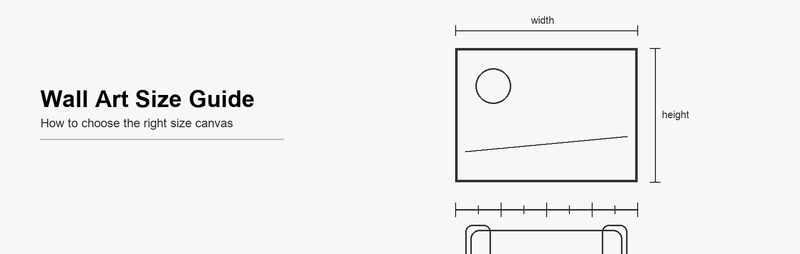
Full measurements for both cases are in the wall art size guide and, for the sofa case specifically, in what size wall art goes above a sofa.
Start with Horizontal Wall Art. For the widest ratios and the longest walls, Panoramic Wall Art, and for the sizes that fill an eight foot sofa wall, Large Wall Art.
For the two subjects that use the width best, Mountain Wall Art and City Wall Art. When the wall turns out to be tall and narrow instead, the opposite shape is Vertical Wall Art.
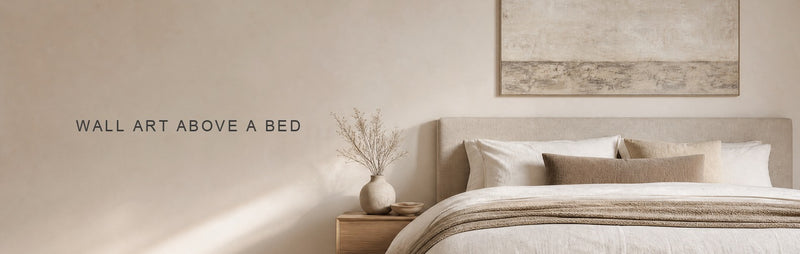
For the room that raises this question most, see wall art above a bed.
Quick answers
Artwork in landscape format, wider than it is tall. It is the shape most rooms need, because the walls that want filling usually sit above something wide: a sofa, a bed, a dining sideboard or a console. The width is chosen from the furniture below rather than from the wall itself.
Artwork should span about two thirds the width of the furniture beneath it. A 72 inch sofa takes roughly 48 inches of art, a 60 inch console takes about 40 inches, and a king headboard at 76 inches takes about 50. Under half the furniture width looks stranded.
About 48 inches wide. The 48 x 32 inch single canvas hits that exactly and is the largest single horizontal piece, so a 72 inch sofa is the widest one a single horizontal canvas serves properly. A panoramic piece is the other route to a wide wall, reaching 60 x 20 inches as one canvas. Above that width the answer is a multi-panel layout.
Landscape format, named after the subject that suited it first. A landscape orientation piece is wider than it is tall, in contrast to portrait orientation, which is taller than it is wide. Panoramic is the extreme case of the same shape, at ratios of 2:1 and beyond.
Yes, and it is the usual choice there. Size it to the headboard rather than the mattress: about 40 inches of art above a queen, about 50 above a king, with 6 to 8 inches of clear wall between the headboard and the bottom edge.
Shop this guide
Every collection this guide mentions. Each one opens on artwork printed to order on museum-quality canvas.
Pieces shown above
Every piece this guide shows, printed to order on museum-quality canvas.
Keep reading
Guides that pick up where this one stops.