

THURSDAY SALE! • EXTRA 10% OFF + FREE SHIPPING DEAL | CODE: THURSDAY10
THURSDAY SALE! • EXTRA 10% OFF + FREE SHIPPING DEAL | CODE: THURSDAY10

Mexico wall art covers four distinct subjects that share a country and little else: Maya ruins, cenotes and turquoise water, Spanish colonial architecture, and Pacific and Caribbean coastline. Each behaves differently on a wall, and the palette is what separates them.

Maya archaeology is the most graphic. Temple of Kukulkan, Chichen Itza and Pyramid of the Sun and Moon, Teotihuacan are geometric stone against open sky, so they behave like architectural photography rather than travel imagery. Warm stone, hard edges, very little color.
Cenotes and inland water are the opposite. Ik-kil Cenote and Agua Azul Waterfall bring saturated turquoise and deep green, which is the strongest color in the category and the hardest to place.
Colonial architecture covers the cities. Palacio De Bellas Artes with Golden Dome and Metropolitan Cathedral at Dusk carry ornament, domes and facades, and they read as European city photography with a warmer light.
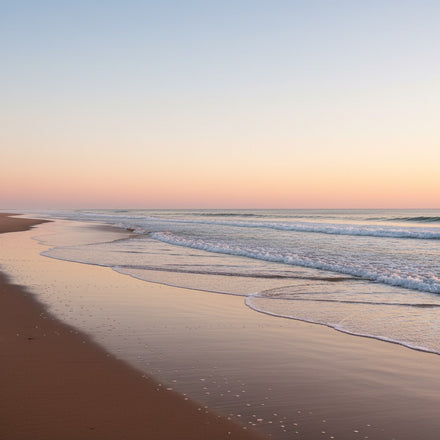
Coast is the softest. Lovers Beach Mexico and Bacalar Lagoon Tropical Huts Over Turquoise Water behave like any coastal piece, and they are the easiest to live with in an ordinary room.

The single most useful thing to know before browsing is that a large share of this category is turquoise, and turquoise is not a neutral.
Cenote water, the Bacalar lagoon and the Caribbean coast all sit in the same narrow band of saturated blue green. In a room built on white, sand and pale wood that color is a genuine focal point and works well. In a room that already has a color scheme it will fight, because turquoise is strong enough to reorganise what the eye reads first.
If the room cannot take it, the Maya and colonial pieces are the answer. Stone, ochre and dusk skies put the same country on the wall in a palette that behaves like a warm neutral.

Several of the strongest pieces here are shot at last light: Popocatépetl Volcano at Dusk, Metropolitan Cathedral at Dusk, Monumento a La Revolución Fountain at Sunset.
There is a practical reason. Mexican midday light is hard and near vertical, which flattens carved stone and washes out color. Low sun rakes across a facade or a pyramid and picks out the relief, so the carving reads as depth rather than as pattern.
For a room this matters more than it sounds. A dusk photograph carries amber and shadow, which sits with warm interiors. The same subject at midday carries bleached stone and hard blue sky, which is a colder and less forgiving image to hang.

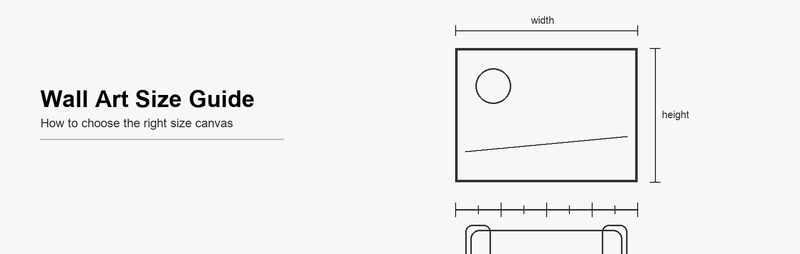
Use the two thirds rule. Artwork above a sofa, bed or console should span roughly two thirds the width of the furniture below it. A standard three seat sofa is about 84 inches wide, so the artwork above it should measure about 56 inches across. Full measurements are in the wall art size guide.
The archaeology and architecture pieces reward size, because the detail is carved relief and it is the first thing lost when a print is small. A pyramid at modest size becomes a triangle.
The water and coastal pieces are more forgiving, since color survives scaling in a way that fine stone detail does not.
Every piece in this collection is offered as a single canvas or as a multi-panel set, chosen on the product page. Coast and lagoon views split across panels comfortably, with the gaps falling into open water. A single pyramid or facade is better as one canvas, because a panel division through a symmetrical building fights the symmetry that makes the shot work.

A living room takes the coastal and lagoon pieces easily, and the colonial architecture if the room is warm.
A study or hallway suits the Maya work particularly well. The subject is quiet and geometric, and a hallway is a place people pass close to, so carved detail is actually seen.
A bedroom works with the dusk pieces, where the palette is amber and shadow rather than saturated blue.
What to avoid is mixing the two ends. A turquoise cenote beside a warm stone pyramid on the same wall reads as two holidays rather than one country, because the eye compares palette long before it compares subject.
Start with Mexico Wall Art. For the cenote and lagoon palette specifically, Turquoise Wall Decor. For the ruins and monuments alongside those of other countries, Landmark Wall Art. For the beaches, Beach Wall Art, and to browse other nations the same way, Countries Wall Art.
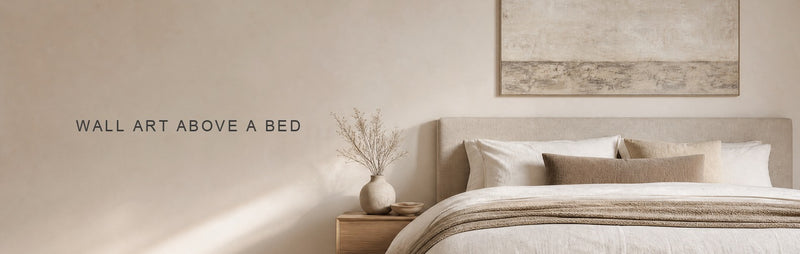
For a room built around a coastal palette, see nautical bedroom ideas, and for placing one large piece above furniture, wall art above a bed.
Quick answers
Artwork with Mexico as its subject, covering four distinct groups: Maya archaeology such as Chichen Itza and Teotihuacan, cenotes and inland water, Spanish colonial architecture in the cities, and Pacific and Caribbean coastline.
The cenote and lagoon pieces are, since turquoise is a strong color rather than a neutral. The Maya and colonial architecture pieces are not: stone, ochre and dusk skies behave like a warm neutral and suit a room that already has a scheme.
Because midday light there is hard and near vertical, which flattens carved stone and washes out color. Low sun rakes across a pyramid or a facade and picks out the relief, so carving reads as depth rather than as flat pattern.
Larger for the archaeology and architecture, where carved relief is the detail that vanishes first and a pyramid printed small becomes a triangle. The water and coastal pieces are more forgiving, because color survives scaling in a way fine stone detail does not.
They can, but match on palette rather than on country. A warm stone pyramid beside a saturated turquoise cenote reads as two different holidays. Pair the dusk architecture with a sunset coast, or the cenote with the lagoon.
Shop this guide
Every collection this guide mentions. Each one opens on artwork printed to order on museum-quality canvas.
Pieces shown above
Every piece this guide shows, printed to order on museum-quality canvas.
 Temple of Kukulkan, Chichen Itza Canvas Wall ArtFrom $69.95
 Ik-kil Cenote, Mexico Canvas Wall ArtFrom $69.95
 Metropolitan Cathedral at Dusk, Mexico Canvas Wall ArtFrom $69.95
 Pyramid of the Sun and Moon, Teotihuacan Canvas Wall ArtFrom $69.95
 Bacalar Lagoon Tropical Huts Over Turquoise Water Canvas Wall ArtFrom $69.95
Keep reading
Guides that pick up where this one stops.