

MONDAY SALE! • EXTRA 10% OFF + FREE SHIPPING DEAL | CODE: MONDAY10
MONDAY SALE! • EXTRA 10% OFF + FREE SHIPPING DEAL | CODE: MONDAY10

Mountain wall art is landscape work whose subject is a peak, a range or a valley. It is the most forgiving subject in a living room because a horizon gives the eye somewhere to go, and it is the easiest to get wrong on size, because a range needs width the way a portrait needs height.

This is the first decision and it changes what the piece means in the room.
A named peak carries a story. Denali, Everest, Pikes Peak and the Three Sisters are recognizable, and anyone who has been there will say so. That is the appeal if the mountain means something to you, and the drawback if it does not, because a named summit is a specific claim about a specific place.
An anonymous range asks nothing. Layered ridges fading into haze read as calm rather than as a destination. If the art is there to settle a room rather than to commemorate a trip, unnamed is usually the better choice.
Because they come with a horizon, and a horizon is what makes a wide canvas work.
A wide image without a horizon becomes a texture when you enlarge it. A mountain range does the opposite: the wider it goes, the more the ridges layer, and the depth increases rather than flattening. That is why mountain work survives being printed at 56 inches when a close up subject does not.
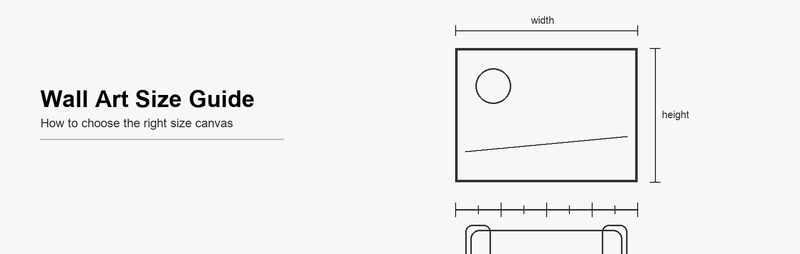
Size it as you would any landscape. Two thirds the width of the furniture below, so about 56 inches above a standard 84 inch three seat sofa. The wall art size guide has the full measurements.

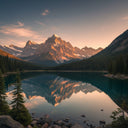
A mountain reflected in still water is a different composition from a mountain alone, and it behaves differently on a wall.
The reflection doubles the subject and puts the strongest line across the middle of the frame. That makes the piece symmetrical, which reads as formal and settled. It also means the composition survives a square or a vertical crop, where a plain range does not.
Moraine Lake, Lake Tahoe and the classic reflection shots suit a space where you want the wall to feel resolved: above a bed, above a console, at the end of a hallway.

Mountain work is not one palette, and this is where the room decides for you.
Snow-capped peaks against blue sky bring strong blue and white. High contrast, cool, and they fight a warm beige room.
Hazy layered ridges reduce to grey and lavender. Almost neutral, and they sit with anything.
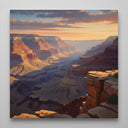
Sunset over ridges brings orange and gold, which warms a cool grey room but competes with an already warm one.
Aurora over mountains brings green, which is the hardest of the four to place and needs a plain room to work in.
If the room is committed to a palette, choose the hazy end. Tiaracle's Neutral Wall Art collection holds the mountain work that stays inside a beige and grey range.

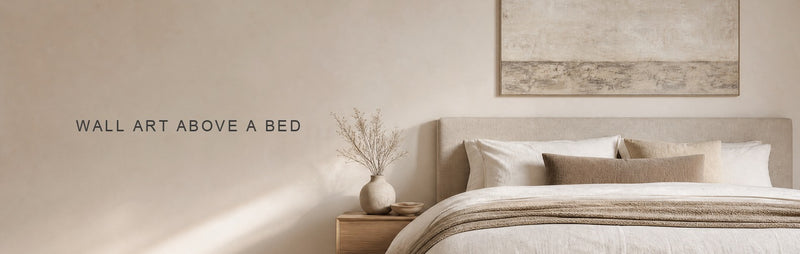
It works, with one caveat: choose the quiet end. A hazy range or a still reflection suits a headboard wall. A dramatic snow peak under hard blue sky is an energetic image, which is the opposite of what most people want to look at last thing at night.
Placement and fixings are in wall art above a bed.

Mountains are the subject multi-panel was invented for. A range split across three or five panels keeps its rhythm, because the gaps fall between ridges rather than cutting through a single object.
A five panel set also reaches the width the two thirds rule wants more easily than a single canvas, which matters on a wide sofa wall. Layout options are shown on each product page.
Hanging it too small is the first, and mountains punish it more than most subjects because the layering is the point. The second is choosing a named peak for a room rather than for a memory, which usually ends with a summit nobody in the house has any feeling about. The third is putting a cool blue snow scene in a warm oak and beige room and wondering why the wall feels cold.
Start with Mountain Wall Art for the full range. For the wider outdoor selection, Nature Wall Art. For ranges reduced to a few tones and a single line, Minimalist Wall Art. For peaks painted in the Chinese ink wash tradition rather than photographed, Asian Wall Art.
Quick answers
Two thirds the width of the furniture below, so roughly 56 inches above an 84 inch three seat sofa. Mountain work needs the size more than most subjects, because the layering of ridges is what creates the depth and it disappears at small scale.
Yes, if you choose the quiet end. A hazy layered range or a still lake reflection suits a headboard wall. A high contrast snow peak under hard blue sky is an energetic image and works better in a room you pass through.
Named peaks such as Denali or Everest carry a story and suit someone with a connection to the place. An anonymous range asks nothing of the viewer and settles a room more easily. Choose named for meaning, unnamed for calm.
Because a range splits cleanly. The gaps between panels fall between ridges rather than cutting through a single object, so the composition keeps its rhythm. A multi-panel set also spans a wide sofa wall more easily than one canvas.
It depends on the treatment. Snow peaks bring cool blue and white, hazy ridges reduce to grey and lavender and read as near neutral, sunsets bring orange and gold, and aurora scenes bring green. Match the treatment to the room rather than picking the mountain first.
Shop this guide
Every collection this guide mentions. Each one opens on artwork printed to order on museum-quality canvas.
Pieces shown above
Every piece this guide shows, printed to order on museum-quality canvas.
Keep reading
Guides that pick up where this one stops.