FRIDAY SALE! • EXTRA 10% OFF + FREE SHIPPING DEAL | CODE: FRIDAY10
FRIDAY SALE! • EXTRA 10% OFF + FREE SHIPPING DEAL | CODE: FRIDAY10

Choose a multi panel set when the image is wide and has a horizon, and a single canvas when the subject sits in the middle of the frame. A split set covers more wall for the same budget and adds rhythm. A single piece keeps a focal subject intact, because a panel gap falls straight through whatever is centerd.
The multi panel vs single canvas decision comes down to two things you can check in a minute: what the image does, and how much usable width the wall has. Everything below is those two questions in more detail.
A multi panel canvas is one image divided across several separate stretched canvases, hung with a small gap between each. It is not several different pictures. The gaps are part of the design, and the eye reassembles the image across them.
That distinction matters when comparing prices. A three panel set is three stretched canvases, three wooden frames and three sets of fixings, which is why it covers more wall than a single piece of similar total width.

1 Piece. One canvas, undivided. The default, and the right answer more often than people expect.
3 Horizontal. One wide image across three equal panels. The workhorse layout for a sofa wall, because most landscape photography carries a horizon that survives being interrupted.
4 Pop. Four panels of staggered height. More movement than 3 Horizontal, and it suits a wall that is wide but not tall.
5 Star. Five panels rising to a center peak. The most decorative arrangement, and the widest coverage for the money.
5 Pop. Five panels in a staggered rhythm. Similar coverage to 5 Star with a less symmetrical feel.

The wall is wider than it is tall. A sofa wall, a bed wall, a long hallway. Split sets are wide by nature, which is exactly the shape those walls need.
The image has a horizon. Landscapes, coastlines, city skylines, fields. A horizontal line running through the image gives the eye something continuous to follow across the gaps.
You want maximum coverage for the budget. Panels spread further than a single canvas of comparable cost, because the gaps add width without adding printed area.
The room can take some movement. Staggered layouts add visual energy. In a busy room that is welcome; in a calm one it competes.

The subject is centerd. A single tree, a face, a lone animal, a building shot straight on. The gap in a split set lands through the middle of the frame, which is the worst possible place when that is where the subject sits.
The wall is narrow. A chimney breast, a space between windows, a stairwell. Split sets need width they will not have.
You want the quietest possible result. Gaps are visual information. A minimalist scheme is usually better served by one uninterrupted piece.
You may move it. One canvas goes back on one hook. A five panel set has to be re-measured and re-levelled every time.

Most disappointing split sets are hung wrong rather than chosen wrong. Three numbers fix that.
Gap between panels: half an inch, or one inch on a 4 Square grid, the gaps our printed hanging guides use. Consistent across the whole set. Wider reads as separate pictures, narrower makes the split look like a mistake.
Treat the group as one rectangle. Measure the full width including the gaps, then center that rectangle on the wall or on the furniture. Centering the middle panel is the most common error, and it throws the whole group off on staggered layouts.
Center height 57 to 60 inches. Measured to the middle of the group, not the middle of one panel. Above furniture, leave 6 to 10 inches of clear wall.
Our guide to arranging a 3 piece canvas set works through the spacing in detail.
Per square inch of wall covered, a split set is usually the cheaper way to fill a large wall. The panels are narrower, so the printed area is smaller than the span suggests, and the gaps contribute width for free.
What that ignores is fixings and time. Five panels means five sets of fixings and a longer, fussier hang. If you are paying someone to hang it, that difference can outweigh the saving.
Look at the image you want, and find the subject. If you can point to one thing in the middle of the frame, buy the single piece. If your finger travels along a horizon instead, the split set will work and will cover more wall.
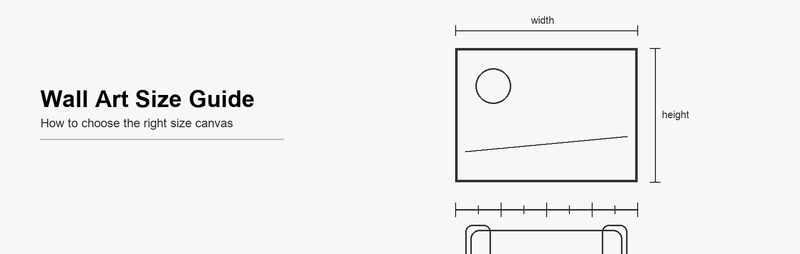
Then measure the wall. Under about 40 inches of usable width, a single piece is the only sensible answer regardless of the image. The wall art size guide covers the proportions to aim for once you know which layout you want.
Browse multi panel wall art for the split layouts, 3 piece wall art for the most common one, or large wall art if the wall is the constraint.
Quick answers
Neither is better in general. A multi panel set suits wide walls and images with a horizon, and covers more wall for the same budget. A single canvas suits centered subjects and narrow walls, because a panel gap would fall through the middle of the subject. Match the layout to the image, not to fashion.
Half an inch, kept identical across the whole set, or one inch on a 4 Square grid; the listed set sizes already include those gaps. Wider than that and the panels read as separate pictures rather than one image; narrower and the split looks unintentional. Measure the gaps rather than eyeballing them, since inconsistency is more visible than the size of the gap itself.
Treat the whole group as a single rectangle. Measure the total width including the gaps, find the center of that, and align it with the center of the wall or the furniture below. Centering the middle panel instead is the most common mistake and it visibly offsets staggered layouts like 5 Star and 4 Pop.
5 Star and 5 Pop span the widest, since five panels plus four gaps cover more than three panels plus two. 3 Horizontal is the most versatile and the easiest to hang straight. On a wall under about 40 inches of usable width, a single piece is the better answer than any split layout.
Shop this guide
Every collection this guide mentions. Each one opens on artwork printed to order on museum-quality canvas.
Pieces shown above
Every piece this guide shows, printed to order on museum-quality canvas.
Keep reading
Guides that pick up where this one stops.