





Surfing Wall Art: Barrel, Silhouette and Palette
Surfing wall art is built almost entirely on one moment and one light: a rider inside or under a wave, shot against a low sun. That narrow range is why the category hangs together so well, and why choosing between its few variations matters more than it does with broader subjects.

The three shots that make up the category
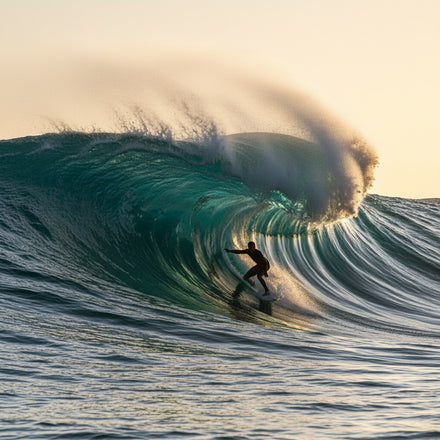
Inside the wave. The rider is in the barrel, with water curling overhead. Surfer in Turquoise Barrel Wave and Surfer Inside Tropical Wave at Sunset work this way. These carry the most color, because the sun comes through the wave face and lights the water from behind.
Silhouette against the sky. The rider becomes a dark shape on a bright ground, as in Surfer Silhouette at Sunset and Surfer Mid-air at Sunset. This is the most graphic version and the easiest to place, because it reduces to two tones.
Carrying the board. The quiet one. Surfer Couple with Longboards at Sunset and Surfers Carrying Boards at Stormy Coast show the walk rather than the ride. These read as beach scenes with a figure, so they suit a room where a mid-action sports image would be too busy.

Why the light is almost always low
Backlighting is not a stylistic preference here. It is what makes a wave photograph work.
Water is translucent, so when the sun sits behind a breaking wave the face lights up from within and turns turquoise or green. Shot with the sun behind the camera instead, the same wave reads as flat grey blue. That is the whole reason surf photography is a sunrise and sunset craft.
Low sun also solves the figure. A surfer is small in the frame and easily lost against moving water, but backlit, the rider goes dark against a bright wave face and stays readable even at a distance. It is the same mechanism that makes horse silhouettes work, applied to a different subject.

The palette, and which rooms take it
Surf art divides cleanly on color, and this is the practical decision.
Turquoise and green pieces, such as Surfer Riding a Translucent Green Wave, are cool. They behave like a coastal neutral and sit comfortably in a room built on white, pale grey, sand or natural wood.
Amber and gold sunset pieces are warm and behave as a focal point. They need a room that can take orange, and they will fight a cool grey scheme.
Mixing the two on one wall is the common mistake. A turquoise barrel shot beside a gold sunset silhouette reads as two unrelated pictures, because the eye compares palette before it compares subject.

Sizing and layout
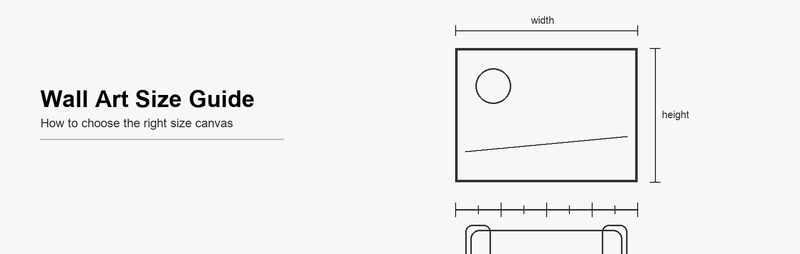
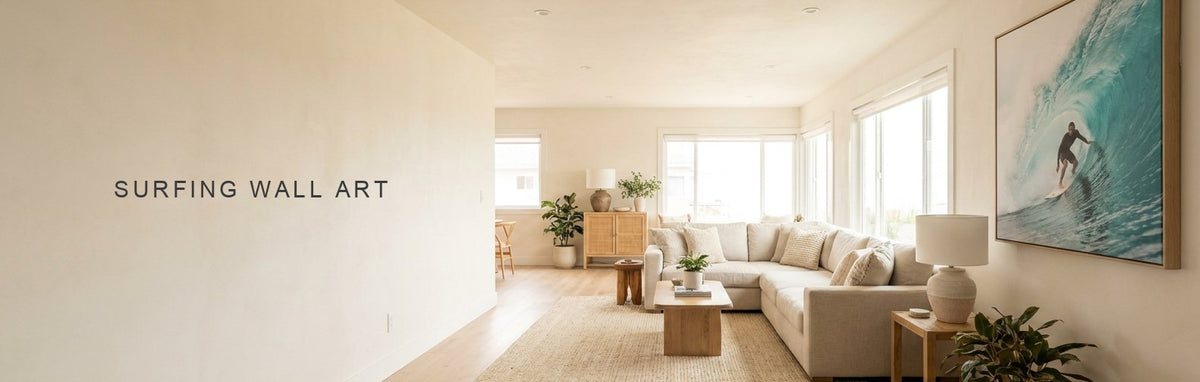
Use the two thirds rule. Artwork above a sofa, bed or console should span roughly two thirds the width of the furniture below it. A standard three seat sofa is about 84 inches wide, so the artwork above it should measure about 56 inches across. Full measurements are in the wall art size guide.
Surf art carries one sizing consideration the rest of the coastal category does not. The rider is the subject and the rider is small, so printing too modestly turns a surfing photograph into a picture of water. Go up a size rather than down, particularly with barrel shots where the figure sits deep in the frame.
Layout options, including multi-panel sets, are chosen on the product page. Silhouette and horizon-based pieces split across panels comfortably, since the gaps fall into open sky and open water. A barrel shot is better as a single canvas, because the wave curls around the rider and a panel division through that curve breaks the one shape holding the image together.

Where surf art works
It works in a bedroom when you choose the cool turquoise end, where it behaves like any calm seascape. It works in a living room as a single warm sunset focal piece above a sofa. It works in a home gym or a games room, where the movement suits the room's purpose.
It works less well as a set. Surf photography is repetitive by nature, since the sport offers a narrow range of moments, so three or four pieces on one wall start to look like the same picture repeated. One strong image is almost always the better decision.
One practical caution: canvas is not rated for humid rooms, so a bathroom or a poolside room is not a suitable place for it however well the subject seems to fit.
What to browse
Start with Surfing Wall Art. For the wider sea and shore category the subject sits inside, Coastal Wall Art and Beach Wall Art. For other sports treated the same way, Sports Wall Art, and for the Pacific breaks much of this work is shot on, Hawaii Wall Art.
For a room built around the palette rather than a single piece, see nautical bedroom ideas, and for placing one large piece above furniture, wall art above a bed.
Quick answers
Common Questions
What is surfing wall art?
Artwork with surfing as its subject, built around three shots: the rider inside the barrel, the rider silhouetted against a low sun, and the quieter walk carrying a board. Almost all of it is photographed at sunrise or sunset.
Why is surf photography always shot at sunrise or sunset?
Because water is translucent. With the sun behind a breaking wave the face lights from within and turns turquoise or green, while the same wave shot with the sun behind the camera reads as flat grey blue. Low sun also keeps the small figure of the rider readable.
What size should surfing wall art be?
Larger than you might first choose. The rider is the subject and the rider is small in the frame, so a modest print turns a surfing photograph into a picture of water. Start at two thirds the width of the furniture below and go up rather than down.
Does surfing wall art only suit a beach house?
No. The turquoise and green pieces behave as coastal neutrals in any room built on white, sand or natural wood. What makes a room look themed is repetition, so a single strong image avoids the problem that a wall of surf photographs creates.
Should surf art be a single canvas or a multi-panel set?
Silhouette and horizon pieces split across panels well, because the gaps fall into open sky and water. A barrel shot is better as a single canvas, since the wave curls around the rider and a panel division through that curve breaks the shape holding the picture together.
Shop this guide
The collections in this guide
Every collection this guide mentions. Each one opens on artwork printed to order on museum-quality canvas.

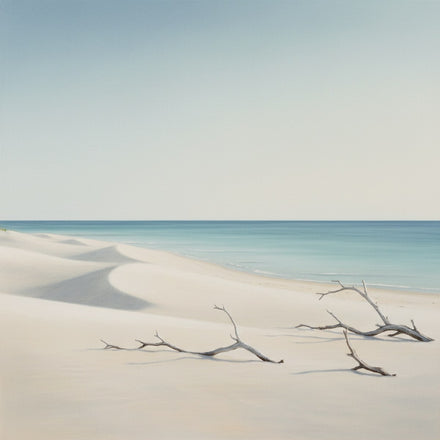
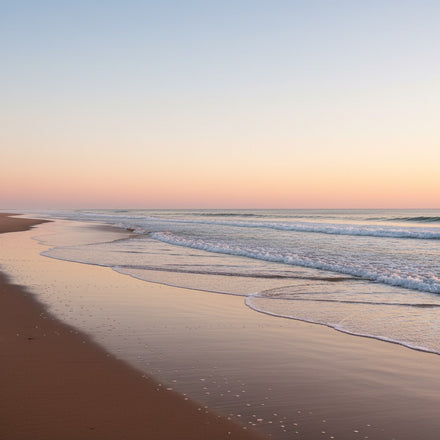


Pieces shown above
The pieces in this guide
Every piece this guide shows, printed to order on museum-quality canvas.
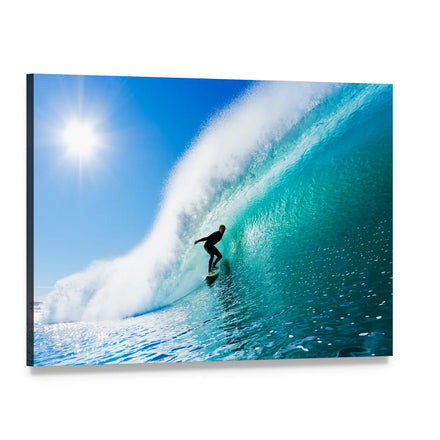 Surfer in Turquoise Barrel Wave Canvas Wall ArtFrom $69.95
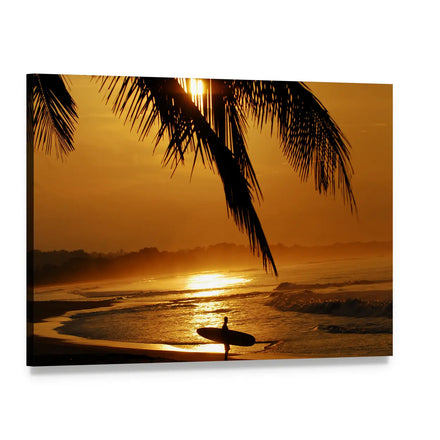 Surfer Silhouette at Sunset Canvas Wall ArtFrom $69.95
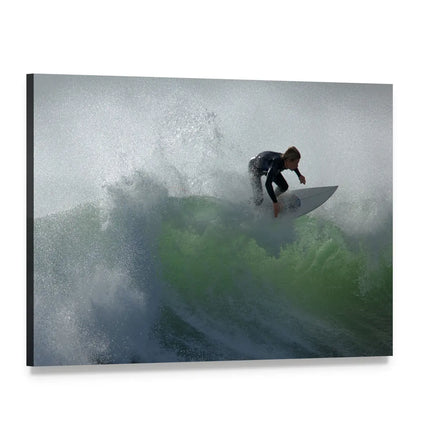 Surfer Riding a Translucent Green Wave Canvas Wall ArtFrom $69.95
 Surfer Riding Giant Curling Wave Vertical Canvas Wall ArtFrom $99.95
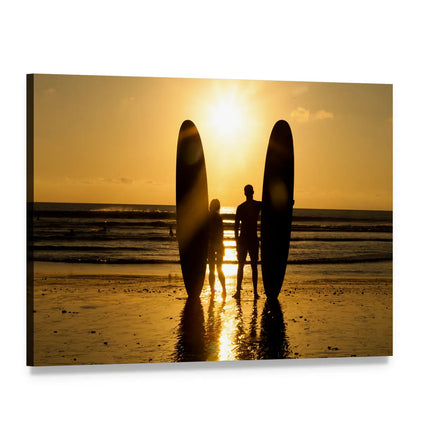 Surfer Couple with Longboards at Sunset Canvas Wall ArtFrom $69.95

Keep reading
Read next
Guides that pick up where this one stops.