

FRIDAY SALE! • EXTRA 10% OFF + FREE SHIPPING DEAL | CODE: FRIDAY10
FRIDAY SALE! • EXTRA 10% OFF + FREE SHIPPING DEAL | CODE: FRIDAY10

Tropical wall art divides into two things that rarely suit the same room. One is the botanical leaf print, a flat graphic of monstera or palm fronds. The other is a photograph of a real tropical place, with water, horizon and light in it. Deciding between them is the whole choice.

A leaf print is a pattern. It reads as color and shape, it repeats happily in pairs and threes, and it behaves like wallpaper that happens to be framed. It suits a bathroom, a hallway or a small wall where you want green without depth.
A destination photograph is a view. It has a horizon, a foreground and a distance, so it opens the wall rather than decorating it. It suits the wall you actually look at from a seat: above a sofa, facing a bed, across a dining table.
The practical difference is viewing distance. A leaf print still works at arm's length in a narrow space. A photograph of a lagoon needs room to be seen from, and hung in a tight hallway most of the picture goes unread.

Photographs, almost entirely. Beaches, palms, islands, sunsets and aerial views of coastline, with the leaf and pattern work a small minority.
That is the opposite weighting to most of what ranks for this term, where the leaf graphic leads. If a monstera pair is what you came for, this is not the strongest collection for it. If you want a real place, it is.
The aerial views are the strongest group. Tropical Island Aerial View looks straight down at reef and sand, which gives a flat graphic quality with real texture in it, and that is the one type here that satisfies both tastes at once.

Tropical work brings turquoise into a room whether you planned it or not. Reef water, shallow lagoon and pool blue run through most of these pieces, and turquoise is a strong color that decides what else can sit near it.
It works with white, sand, pale oak, rattan and warm terracotta. It fights with cool grey walls, navy and black metal, which pull the water toward a dull teal and drain the warmth out of the sand.
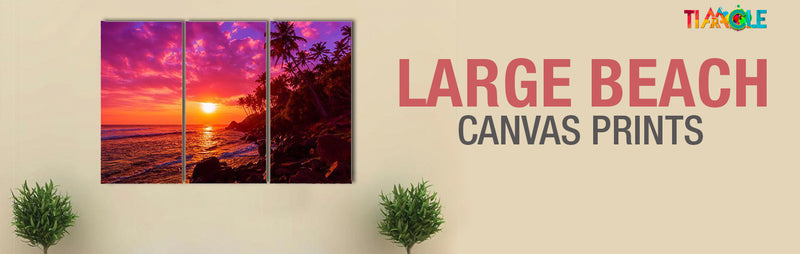
The sunset pieces are the exception. Tropical Sunset with Palm Silhouettes replaces turquoise with orange and black, so it sits in a warm room where a lagoon photograph would not.

A picture of a named place holds attention longer than a generic beach, because it carries a fact as well as a view. Bora Bora, the Maldives, Thailand, the Philippines and Hawaii are all represented here as themselves rather than as anonymous sand.
This matters more than it sounds. Generic tropical imagery is the most reproduced category in home decor, so a stock sunset reads as filler. A specific lagoon, a specific overwater row of huts or a specific limestone bay in Palawan reads as a photograph somebody took.
One honest note on timing: search demand for this term is down about 18 percent year on year. Tropical is past its peak as a decorating trend, which is exactly why the specific and photographic end of it has aged better than the leaf graphic.

Buy wide. A tropical view is built on a horizon, and a horizon needs width to work, so a small square crop of a lagoon loses the openness that made the picture worth hanging.
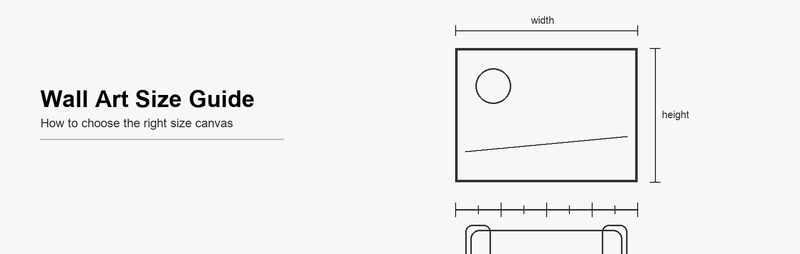
Above furniture, span about two thirds the width of what sits below and leave 6 to 8 inches of clear wall between them. On a bare wall, center the piece 57 to 60 inches from the floor. The wall art size guide has the full measurements.
Every piece here is offered as a single canvas or as a multi-panel set. Multi-panel suits a wide beach or an aerial coastline, where the gaps fall in open water and sand rather than through a subject. Keep a single palm or a single boat as one canvas.
Bathrooms take the leaf and pattern work best, since it is a short viewing distance and the color does the job on its own. Bedrooms and living rooms take the photographs, which need a seat to be looked at from.
A kitchen or dining wall suits the sunset pieces rather than the daylight ones, because a warm orange picture holds up under evening light while a bright noon lagoon can look bleached after dark.
Start with Tropical Wall Art. For the wider category without the palms, Beach Wall Art and Island Wall Art.
For named places, Bora Bora Wall Art and Maldives Wall Art. If the water color is the reason you are here, Turquoise Wall Art gathers it across every subject.
For rooms built around this palette, see beach house decoration ideas and beach wall art in multi panel sets.
Quick answers
Artwork with a tropical subject, covering two different looks. One is the botanical leaf print, a flat graphic of monstera or palm fronds. The other is a photograph of a real tropical place with water, horizon and light in it. The first decorates a wall, the second opens it.
White, sand, pale oak, rattan and warm terracotta. Most tropical pieces bring turquoise into the room from reef and lagoon water, and turquoise sits badly against cool grey, navy and black metal, which pull it toward a dull teal.
It is past its peak. Search demand for the term is down about 18 percent year on year. The leaf graphic has dated faster than the photograph, so a specific named place, such as a Bora Bora lagoon or a Palawan bay, holds up better than a generic printed frond.
Leaf prints suit bathrooms and hallways, where the viewing distance is short and color alone does the work. Photographs suit bedrooms and living rooms, where there is a seat to look from. Sunset pieces suit kitchens and dining walls, because they hold up under evening light.
Yes, on wide subjects. A beach, a coastline or an aerial lagoon splits well because the gaps between panels fall in open water and sand. A single palm tree or a single boat is better kept as one canvas, so no gap cuts through the subject.
Shop this guide
Every collection this guide mentions. Each one opens on artwork printed to order on museum-quality canvas.
Pieces shown above
Every piece this guide shows, printed to order on museum-quality canvas.
 Palm Tree on Tropical Beach Canvas Wall ArtFrom $69.95
 Tropical Island Aerial View Canvas Wall ArtFrom $69.95
 Turquoise Ocean Cliffs with Tropical Vegetation Canvas Wall ArtFrom $69.95
 Big Lagoon Philippines Tropical Bay Canvas Wall ArtFrom $69.95
 Tropical Sunset with Palm Silhouettes Panoramic Canvas Wall ArtFrom $98.95
Keep reading
Guides that pick up where this one stops.