

FRIDAY SALE! • EXTRA 10% OFF + FREE SHIPPING DEAL | CODE: FRIDAY10
FRIDAY SALE! • EXTRA 10% OFF + FREE SHIPPING DEAL | CODE: FRIDAY10
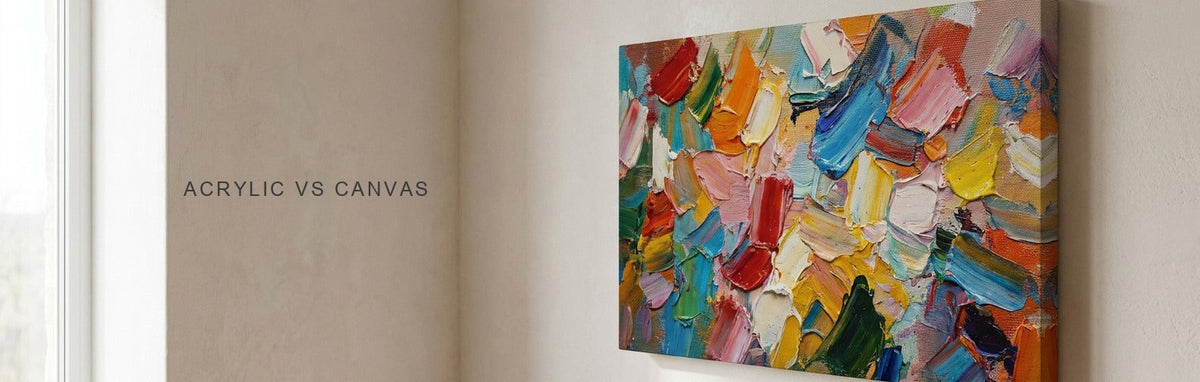
Acrylic vs canvas print is a choice between two different products, not two finishes of one. An acrylic print face-mounts the image to clear acrylic for a glossy surface. A canvas print lays pigment ink on woven canvas over a wooden frame. Tiaracle prints on canvas, not acrylic.
That distinction matters more than it sounds, because the word acrylic does double duty in art. It names a mounting material and it names a paint. Those are unrelated, and confusing them is the single most common mistake in this comparison.

| Acrylic print | Canvas print | |
|---|---|---|
| Surface | Clear acrylic sheet, high gloss | Woven canvas, visible weave, matte |
| Reflection | Mirror-like, shows room and window glare | Diffuses light, readable from most angles |
| Depth effect | Colors read deep and saturated through the sheet | Color sits on the weave, softer and more painterly |
| Weight | Heavy for its size, acrylic is dense | Light, fabric over a hollow wooden frame |
| Edges | Cut sheet edge, usually float-mounted off the wall | Gallery wrap, image continues around the sides |
| Sold by Tiaracle | No | Yes |
Neither is better in the abstract. They fail in different rooms, which is the useful way to choose between them.

An acrylic sheet is reflective by design. In a room with a window opposite the wall, or a ceiling downlight aimed at the piece, that gloss returns the light straight back and a section of the image disappears into a bright patch. The effect is strongest on dark artwork, where the sheet behaves close to a mirror.
Canvas has the opposite behavior. The woven surface scatters light rather than returning it, so the image stays readable from an angle and under a lamp. If the wall faces a window, or the room is lit from the ceiling rather than the side, that difference is the whole decision.
Acrylic is a dense material and a large sheet gets heavy quickly, which pushes you toward anchors rather than a picture hook and rules out some plasterboard and rented walls. A canvas print of the same dimensions is a fabric skin over a hollow wooden frame, so it stays light even at large sizes.
That is why the biggest formats in this catalog are canvas. A panoramic canvas reaching 60 by 20 inches, or a horizontal single piece at 48 by 32, stays hangable on an ordinary wall in a way an acrylic sheet of the same span does not.

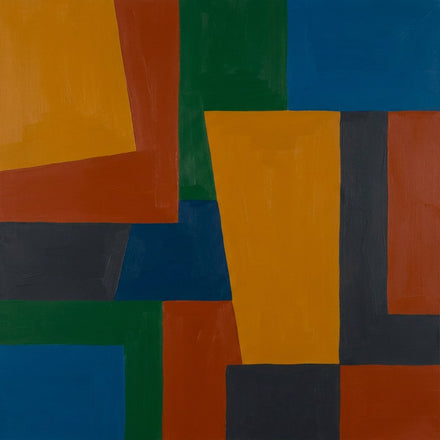
Acrylic paint is one of the most common media in modern painting: fast drying, thickly layered, capable of the pour, impasto and brush-mark effects that define a lot of contemporary abstract work. Artwork painted in acrylic is exactly what our Acrylic Wall Art range holds, printed on canvas.
So both statements are true at once, and it is worth being precise about which one is meant. We do not offer acrylic mounting. We do carry artwork painted in acrylic. The same distinction applies to Oil Painting Canvas Art, which is oil-painted artwork printed on canvas rather than an oil painting.
Acrylic mounting is a photo-lab format rather than a canvas-specialist one, which is why the stores that offer it are print services rather than art catalogs. CanvasDiscount and WhiteWall both sell acrylic alongside their other formats, and both are reasonable starting points if the gloss finish is the specific requirement. If the appeal is the hard, modern surface rather than acrylic itself, Displate sells the same idea in metal, which is a different material again with its own weight and mounting behavior.
Saying so is more useful than pretending the format does not exist. If a sharp photograph behind gloss acrylic is the goal, a canvas catalog is the wrong place to look, and it is better to say that than to argue you into a substrate you did not want.

When the original artwork has visible brushwork, the weave of canvas sits with it. Pour patterns, impasto ridges and dry-brush edges read as paint because the surface underneath is fabric rather than plastic. On a gloss acrylic sheet the same file reads as a photograph of a painting, because the surface says photograph.
Photography inverts that logic, which is where acrylic earns its reputation. A sharp night cityscape or a high-saturation macro benefits from the depth the sheet adds. For painted subjects, the substrate that matches the medium is the one that disappears.

For acrylic-painted abstracts, pours and heavy brushwork, start with Acrylic Wall Art. For painterly work in other media, Oil Painting Canvas Art and Abstract Wall Art cover the same territory with a different surface quality. The framed against unframed comparison covers the next decision once canvas is chosen, and what to look for in a canvas print covers judging quality before you buy.
Quick answers
An acrylic print mounts the image to a clear acrylic sheet, producing a glossy, reflective, glass-like surface. A canvas print puts pigment ink on woven canvas stretched over a wooden inner frame, producing a matte, textured surface. They are different products with different weight, glare behavior and edge treatment.
No. We print on canvas and paper, so acrylic and plexiglass mounting is not offered. We do carry artwork painted in acrylic, printed on canvas, which is a different thing and a common source of confusion.
Canvas, in most cases. The woven surface scatters light instead of reflecting it, so the image stays readable opposite a window or under ceiling lighting. An acrylic sheet returns that light and can lose a section of the image to glare, especially on dark artwork.
Yes, noticeably. Acrylic is a dense material and weight climbs quickly with size, which affects what hardware the wall needs. A canvas print is fabric over a hollow wooden frame and stays light even in large and panoramic formats.
Because the substrate should match the medium. Visible brushwork, pour patterns and impasto ridges read as paint on a woven surface and read as a photograph of a painting on gloss plastic. Photography is the reverse case, which is where acrylic mounting genuinely shines.
Shop this guide
Every collection this guide mentions. Each one opens on artwork printed to order on museum-quality canvas.
Pieces shown above
Every piece this guide shows, printed to order on museum-quality canvas.
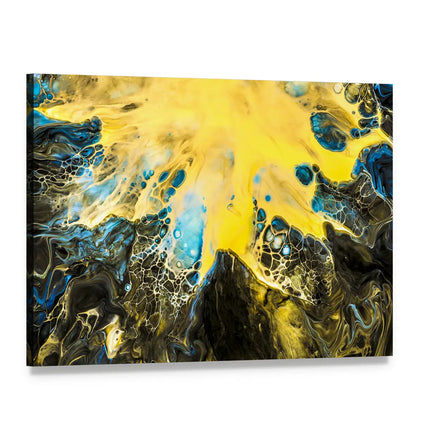 Acrylic Pour Abstract in Gold and Blue Canvas Wall ArtFrom $69.95
 Colorful Acrylic Impasto Abstract Canvas Wall ArtFrom $69.95
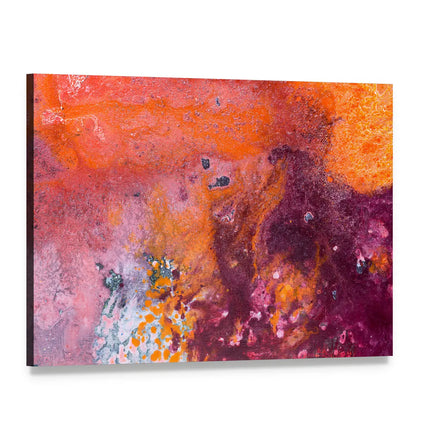 Fluid Acrylic Pour Abstract in Orange and Purple Canvas Wall ArtFrom $69.95
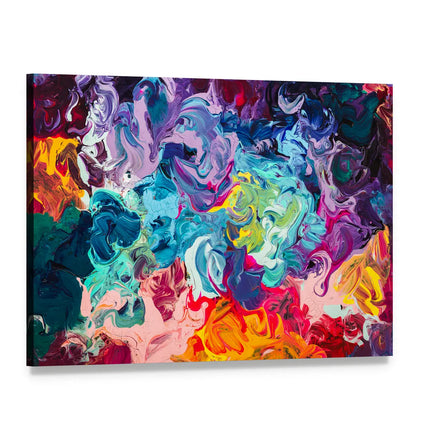 Colorful Acrylic Abstract with Thick Paint Swirls Canvas Wall ArtFrom $69.95
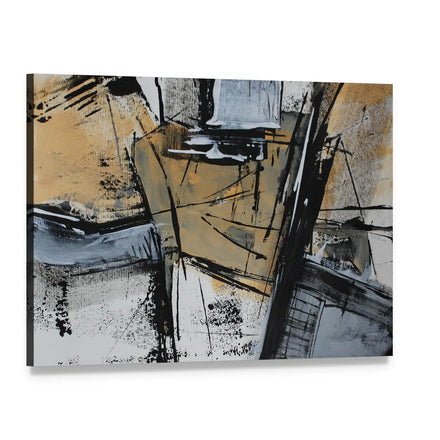 Acrylic Brushstrokes Fragment Canvas Wall ArtFrom $69.95
Keep reading
Guides that pick up where this one stops.