

THURSDAY SALE! • EXTRA 10% OFF + FREE SHIPPING DEAL | CODE: THURSDAY10
THURSDAY SALE! • EXTRA 10% OFF + FREE SHIPPING DEAL | CODE: THURSDAY10

Baseball wall art has a licensing problem, and it shapes everything you will find. Team logos, club marks and player likenesses are licensed property, so most sellers cannot use them. What is left is generic baseball: the ball, the glove, the empty stadium, and the vintage era whose imagery has aged out of copyright.

Search results split into three groups and the split is a legal one rather than a stylistic one.
Licensed goods carry the league or club marks. They come from official channels and cost accordingly.
Vintage imagery works because early twentieth century photographs, ticket stubs, scorecards and patent drawings sit outside current protection. That is why "vintage baseball" is such a large share of what sells, and it is a legal fact dressed up as a design trend.
Generic baseball is the third route: a ball, a bat, a glove, floodlights, an anonymous stadium. No marks, no faces, nothing to license. That is what this collection is, in full. There are no team logos and no named players here, and that is deliberate rather than an oversight.

Four groups, and they behave very differently on a wall.
Stadiums at night are the largest. Floodlights, an empty or half-lit arena, the diamond from behind home plate. These read as architecture as much as sport.
Equipment close-ups: the glove, the bat, the ball on grass. Quiet, and the easiest to place in a room that is not otherwise a sports room.
Baseball and the American flag, a pairing that appears repeatedly. Worth knowing it is a patriotic piece as much as a sporting one, which is a different statement in a living room.
Baseball on fire, which is the most distinctive group here: a ball wrapped in flame, a fiery vortex, a cracked ball alight. Graphic and high contrast rather than photographic.

Worth separating out, because they are unlike everything else and the search term will not sort them for you.
A flaming baseball is a poster in spirit: saturated orange against black, high energy, no subtlety. In a bedroom belonging to someone who plays, it lands exactly right. In a living room it will be the loudest object in the space by a wide margin.
If the room is shared or adult, the stadium and equipment work is the safer half of this collection. If it is a kid's room or a games room, the fire pieces are the reason to look here at all.

Almost all the stadium work here is empty or near empty, and that is what makes it hang well.
A crowd dates a photograph instantly: the clothes, the phones, the advertising boards. An empty stadium under lights is just geometry, symmetry and grass, and it stays current. It is also calmer, which matters because a picture on a wall is looked at for years rather than for the length of a game.
The same logic explains why the floodlight shots work: the light does the composition, the tiers of empty seating give it depth, and nothing in the frame ties it to a season.

Stadium pieces want width. The subject is a bowl seen from one side, so a wide canvas keeps the sweep of the tiers and a square crop turns it into a fragment of seating.
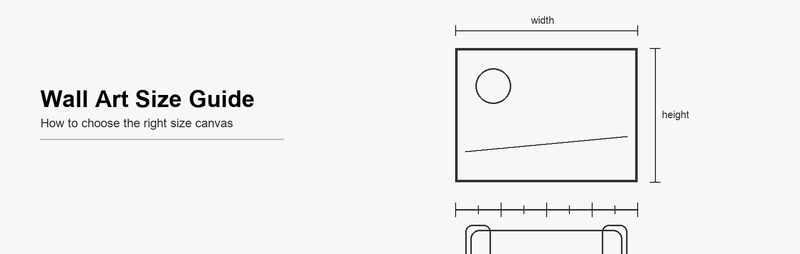
Equipment close-ups go the other way and hold up square or upright, since a glove or a ball is a compact subject. Above furniture, span about two thirds the width of what sits below and leave 6 to 8 inches of clear wall between them. Full measurements are in the wall art size guide.
Every piece is offered as a single canvas or as a multi-panel set. A wide stadium splits well, because the gaps fall between sections of seating. Keep a single ball or glove as one canvas: a panel gap through a round object reads as a mistake.
A games room, a home bar or a teenager's bedroom takes any of it. A living room takes the stadium and equipment work but rarely the flaming ball.
The wall behind a television is the natural home for a wide stadium piece, since the proportions match and the subject suits the setting, and that wall has its own set of rules. Night stadium pieces are dark, so give them a lit wall rather than a dim corner.
Start with Baseball Wall Art, and for the wider category Sports Wall Art.
For the floodlit stadium look specifically, City Lights Wall Art. For the format a stadium really wants, Panoramic Wall Art and Horizontal Wall Art, or Large Wall Art for a games room wall.
For placing a wide piece, see living room wall art ideas.
Quick answers
Because league and club marks and player likenesses are licensed property, so sellers without a license cannot use them. That leaves two routes: vintage imagery old enough to sit outside current protection, and generic baseball with no marks or faces. This collection is entirely the generic kind.
Four things. Stadiums under floodlights, equipment close-ups of the ball, bat and glove, baseball paired with the American flag, and graphic pieces such as a ball wrapped in flame. Each suits a different room, and the flaming ones are the loudest by far.
No, but half of it is. The flaming ball and high contrast graphic pieces suit a bedroom or games room. The empty stadium and equipment close-ups read as architecture and still life, and those sit comfortably in a living room or study.
Because a crowd dates a photograph. Clothes, phones and advertising boards fix it to a year. An empty stadium under lights is geometry, symmetry and grass, so it stays current, and it is calmer to live with over the years you will actually look at it.
Stadium pieces want width, since the subject is a bowl seen from one side and a square crop reduces it to a fragment of seating. Equipment close-ups hold up square or upright. Above furniture, span about two thirds the width of what sits below.
Shop this guide
Every collection this guide mentions. Each one opens on artwork printed to order on museum-quality canvas.
Pieces shown above
Every piece this guide shows, printed to order on museum-quality canvas.
Keep reading
Guides that pick up where this one stops.