

MONDAY SALE! • EXTRA 10% OFF + FREE SHIPPING DEAL | CODE: MONDAY10
MONDAY SALE! • EXTRA 10% OFF + FREE SHIPPING DEAL | CODE: MONDAY10

Boho wall art ideas depend on layering rather than matching. Build around one large piece, add two or three smaller ones at uneven sizes, and hold the whole group together with a warm earth palette. Mismatched sizes are the point. A matched set reads as a different style entirely.
Bohemian decorating gets described in terms of objects, macrame, rattan, plants, and that misses what the walls are doing. Three things carry it.
Layering. Pieces at different sizes, sometimes overlapping, sometimes propped rather than hung. A grid of identical frames is the opposite of boho even if every image in it is a mandala.
A warm, earthy palette. Terracotta, ochre, sand, rust, olive, cream. The palette is what holds a deliberately mismatched arrangement together. Without it the wall reads as unresolved rather than relaxed.
Handmade texture. Subjects that look drawn, painted or woven rather than photographed. This is why watercolor and pattern work carry the style more easily than crisp landscape photography.
If you are still deciding whether this is your direction at all, our post on understanding your design style works through that question. This article assumes you have decided and covers what to put on the wall.
Every layered wall needs one piece large enough to hold the rest together, usually 30 to 40 inches on its longest side. Hang it slightly off center on the wall rather than dead middle, since the arrangement will grow around it asymmetrically. Everything else is placed in relation to this piece, not to the wall.
Two or three more, deliberately different sizes, with gaps between 2 and 4 inches. Vary the gaps slightly as well. Perfectly even spacing pulls the arrangement back toward a formal gallery wall, which is a different look. The group should still sit inside a loose overall shape, so it reads as one arrangement rather than scattered pieces.

Mandala wall art is the most direct route to the style and works best as the anchor rather than repeated across every piece. One strong symmetrical pattern surrounded by looser, less structured pieces gives the wall a focus. Three mandalas in a row reads as a set, which is too tidy for the look.
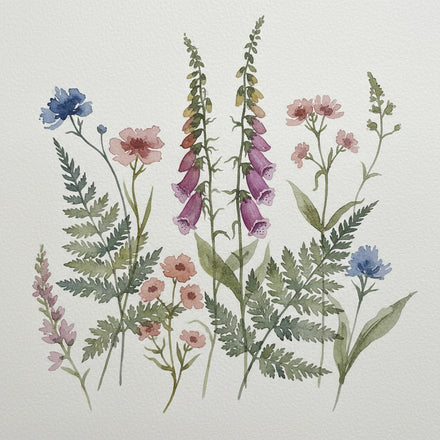
Watercolor art supplies the handmade quality that holds the whole style together. Washed edges and visible brushwork read as made rather than manufactured. Use these as the supporting pieces around a stronger anchor.

Botanical wall art is the most useful boho subject because it bridges the gap between pattern and image. Leaves, palms and dried grasses carry organic shape without competing with a mandala, and they agree with the real plants that usually sit below the arrangement.
Leaning a canvas on a shelf, a dresser or the floor against the wall is a genuine part of the style rather than a shortcut. It breaks the flat plane of a hung arrangement and adds depth. Overlap it slightly with the hung pieces above or beside it so it reads as part of the group.

Layered walls fail when every piece brings its own color scheme. The fix is a hard constraint: pick three or four colors and let every piece contain at least one of them.
A reliable boho palette is terracotta, cream, olive and a single deep accent such as charcoal or indigo. Within that, pieces can differ enormously in subject and style and still read as belonging together. The eye reads the shared palette before it reads the differing subjects.
| Room base | Palette that works | Anchor subject |
|---|---|---|
| White walls, natural wood | Terracotta, cream, olive | Large mandala or pattern |
| Warm grey or greige walls | Rust, ochre, sand | Desert or dried botanical |
| Cream or beige walls | Indigo, charcoal, warm neutral | Bold graphic pattern |
| Dark or moody walls | Brass tones, cream, deep green | Something with a lit area in it |

The usual 57 to 60 inch rule applies to the arrangement, not to the individual pieces. Find the visual center of the whole group and put that at 57 to 60 inches from the floor.
Where the group sits above furniture, a sofa, a sideboard, a bed, the furniture takes over. Leave 8 to 10 inches between the top of the furniture and the lowest piece in the arrangement, and let the group climb from there.
Build it on the floor first. Lay the pieces out, move them until the shape looks right, photograph the layout, then reproduce it on the wall. This matters more for a layered arrangement than a symmetrical one, because there is no formula to fall back on when it looks wrong. Our gallery wall layout guide covers the paper-template method that makes this straightforward.

Four failures account for most of it.
The style tolerates a lot of variation but very little indecision. A wall where every piece was clearly chosen for the same room will look right even if nothing matches. A wall assembled from whatever was available will not, regardless of how well each individual piece works.
Browse bohemian wall art for anchor pieces, and remember that a canvas printed to order and stretched over a solid wooden inner frame arrives ready to hang, which suits an arrangement you may want to adjust more than once before settling it.
Layered walls are usually shown in large rooms with high ceilings, which is not where most people are working. Both constraints are manageable.
In a small room, reduce the number of pieces rather than their size. Two pieces, one large and one small, still reads as layered. Four small pieces in a tight space reads as clutter, and clutter is the failure mode this style is closest to. The anchor still needs to be genuinely large, even if it is the only substantial thing in the room.
Use height rather than width where the wall is narrow. A tall arrangement climbing above eye level suits a small room, and it draws the ceiling up rather than making the wall feel crowded.
For rentals, leaning is the answer. A large canvas propped on the floor against the wall, with a smaller one overlapping it and a plant beside, gives the whole look with no fixings at all. This is a legitimate arrangement in this style rather than a compromise, which is not true of most other looks.
Where you can make a small number of holes, spend them on the anchor piece and lean everything else. One fixing plus three propped pieces is a complete arrangement.
Boho walls rarely consist only of art, and planning for the other elements avoids the arrangement fighting them.
Plants are usually the biggest factor. A trailing plant on a shelf will grow into the space beside a canvas within a few months, so leave more room on that side than looks necessary at the time of hanging. Mirrors, woven pieces and shelves all want to be treated as part of the same arrangement rather than added afterwards.
Texture is what stops a layered wall looking flat, and it does not all have to come from the art. A canvas has surface texture of its own, and a gallery wrap sits proud of the wall in a way that reads differently from a framed print. Mixing a wrapped canvas with a propped piece and a plant gives three different depths in the same arrangement, which is most of what makes the style work.
The one thing to keep consistent through all of it is the palette. Objects, plants and art can vary in form as much as you like as long as the colors agree.
Above all, treat the wall as something that accumulates rather than something you finish in an afternoon. The arrangements that look best are almost always the ones that started with a single good anchor piece and grew slowly, with each addition chosen against what was already there. Buying a complete set at once is the surest way to end up with a wall that looks bought rather than built.
Quick answers
Layering, a warm earth palette, and texture that looks handmade rather than photographed. Pieces at deliberately uneven sizes with slightly uneven gaps, held together by three or four shared colors such as terracotta, cream, olive and one deep accent. A matched set in identical frames reads as a formal gallery wall instead.
Start with one anchor piece 30 to 40 inches on its longest side, placed slightly off center. Add two or three smaller pieces at different sizes with gaps of 2 to 4 inches, varying the gaps a little. Lay the whole arrangement out on the floor first and photograph it before putting anything on the wall.
Terracotta, rust, ochre, sand, olive and cream, with one deeper accent such as charcoal or indigo. The specific colors matter less than the discipline: choose three or four and make sure every piece in the arrangement contains at least one of them. That shared palette is what lets the sizes and subjects vary freely.
One large anchor piece and several small ones. The anchor, a single canvas at 36 by 24 inches or larger, gives the layered arrangement something to organize around. The small pieces, 12 to 20 inches, fill in beneath and beside it. A boho wall made only of small pieces reads as clutter; one large piece turns the same objects into a composition.
Yes, if the palette stays narrow. In a small rented room, keep to two or three warm colors, hang one medium canvas as the anchor, and lean or hang the rest with adhesive strips so nothing needs filling later. Textiles and plants carry the boho layering; the wall itself needs less than you think.
Shop this guide
Every collection this guide mentions. Each one opens on artwork printed to order on museum-quality canvas.
Pieces shown above
Every piece this guide shows, printed to order on museum-quality canvas.
 Concentric Blue Purple Mandala Canvas Wall ArtFrom $69.95
 Summer Cove with Terracotta Village Canvas Wall ArtFrom $69.95
 Kuthodaw Pagoda in Mandalay Canvas Wall ArtFrom $69.95
 Gothic Cathedral Tower Over Terracotta Rooftops Vertical Canvas Wall ArtFrom $116.95
 Elephant and Dog Under Rain Canvas Wall ArtFrom $69.95
Keep reading
Guides that pick up where this one stops.