WEEKEND SALE! • EXTRA 10% OFF + FREE SHIPPING DEAL | CODE: WEEKEND10
WEEKEND SALE! • EXTRA 10% OFF + FREE SHIPPING DEAL | CODE: WEEKEND10

Floral wall art and botanical wall art are sold as one thing and are not one thing. Floral means the flower is the subject: the bloom, its color, its petals. Botanical means the plant is the subject, drawn or photographed as a specimen with leaves, stems and structure. Choosing the wrong one is the usual mistake.
A floral piece leads with color. It is bought the way a cushion or a rug is bought, to put a specific pink, yellow or purple onto a wall, and it works in a room that has a palette to match.
A botanical piece leads with line. Green, sepia or ink on a pale ground, closer to a drawing than to a photograph, and it works in a room that wants structure rather than color.
The practical test: if you can name the color you want before you know the flower, you want floral. If you would be happy with the same image in green and cream, you want botanical.

Three different products sit under this one label here, and they behave differently on a wall.
Photographs are the largest group: tulip fields, lavender rows, poppy meadows, single blooms with dew on them. They carry real color and read as a place.
Paintings, mostly watercolor, are softer and lower in contrast. They sit more quietly in a bedroom, where a saturated photograph can be too much at close range.
Floral mandalas are the surprise. A large minority of this collection is not a picture of a flower at all, but a symmetrical pattern built from floral motifs. They belong with pattern art rather than with nature photography, and they suit a wall that wants symmetry.

Tulips are by a clear margin the most common flower in this collection, ahead of roses, sunflowers and lavender. That is worth knowing because it is the opposite of what most people expect and the opposite of what most people search for.
There is a reason tulips photograph so well at scale. They grow in blocks of one color, in rows, so a tulip field becomes bands of flat color with a horizon behind them. That reads as graphic and modern rather than as a garden picture, which is why a tulip field suits a plain contemporary room better than a rose does.
Roses go the other way. A rose is worth photographing close, one bloom filling the frame, because the interest is in the spiral of the petals rather than in the mass.

Some flowers hold a frame on their own and some need company.
A rose, an orchid and a lotus survive a tight crop, because each has structure at the center that rewards being looked at. Dew drops help, since they give the eye a hard highlight in a soft image.
Daisies, cosmos and wildflowers do not. A single daisy at 36 inches wide is a flat white disc. Those flowers need the meadow, the mass and the repetition, which is why almost every good wildflower piece is a field rather than a portrait.
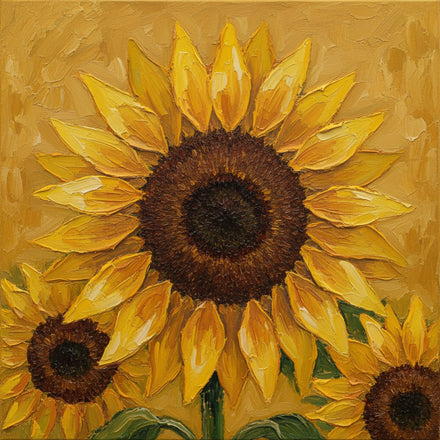
Sunflowers sit between the two. Close, the seed head has enough texture to hold a large frame; far, the field gives the block of yellow that most people are actually after.

Honest gaps, because a page that pretends otherwise wastes your time.
Magnolia is searched about as much as any flower in this category and there is a single magnolia piece in the whole catalogue. Peony and hydrangea do not appear at all. Orchid is a handful of pieces.
Cherry blossom is the opposite case, and it is a navigation problem rather than a stock one. There is real depth of cherry blossom work, but most of it sits under Japanese and tree subjects rather than in the flower collection, filed as landscape because the tree is in a landscape. Search there rather than here for it.

Field pieces want width. A tulip or lavender field is built on bands running across the frame, so a wide canvas keeps the bands and a square crop breaks them.
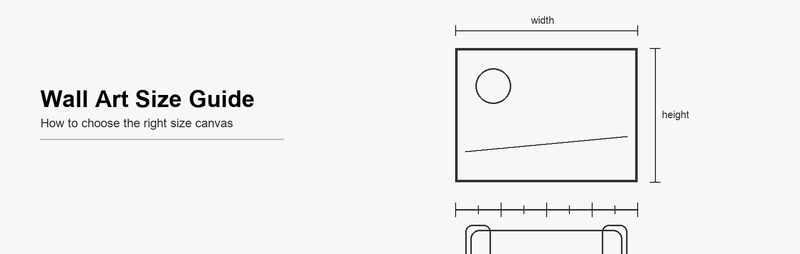
Close-up blooms are the opposite and do their best work square or upright, because the subject is round and centered. Above furniture, span about two thirds the width of what sits below with 6 to 8 inches of clear wall between them, and on a bare wall center the piece 57 to 60 inches from the floor. Full numbers are in the wall art size guide.
Every piece is offered as a single canvas or as a multi-panel set. Fields split well, since the gaps land between rows. Keep a single bloom and any floral mandala as one canvas, because a panel gap through the center of a symmetrical subject cuts the thing you bought it for.
Start with Flower Wall Art. For leaves, stems and specimen structure instead of blooms, Botanical Wall Art.
For the season the fields belong to, Spring Wall Art. For the one flower that carries a whole room on its own, Sunflower Wall Art. For the symmetrical patterns rather than the photographs, Mandala Wall Art, and for cherry blossom, Japanese Wall Art.
For rooms built around a single color, see living room wall art ideas and bedroom wall art tips.
Quick answers
Artwork with a flower as the subject, chosen mainly for its color. It differs from botanical wall art, where the plant is treated as a specimen and the interest is in leaves, stems and structure. Floral leads with color, botanical leads with line.
Floral shows the bloom and puts a specific color on the wall. Botanical shows the whole plant as a study, usually in green, sepia or ink on a pale ground, and reads closer to a drawing. If you can name the color you want before you know the flower, you want floral.
Roses, orchids and lotus, because each has structure at the center that rewards close looking. Daisies, cosmos and wildflowers do not, since a single one becomes a flat disc at size. Those need the meadow, the mass and the repetition to work.
Fields want width, because they are built on bands running across the frame and a square crop breaks them. Close-up blooms do better square or upright, since the subject is round and centered. Above furniture, span about two thirds the width of what sits below.
Yes, if you choose a field rather than a bouquet. Tulips and lavender grow in blocks of one color, so a field photograph reads as bands of flat color with a horizon, which is graphic rather than decorative. A close-up rose reads far more traditional.
Shop this guide
Every collection this guide mentions. Each one opens on artwork printed to order on museum-quality canvas.
Pieces shown above
Every piece this guide shows, printed to order on museum-quality canvas.
Keep reading
Guides that pick up where this one stops.