

FRIDAY SALE! • EXTRA 10% OFF + FREE SHIPPING DEAL | CODE: FRIDAY10
FRIDAY SALE! • EXTRA 10% OFF + FREE SHIPPING DEAL | CODE: FRIDAY10

Coffee wall art is still life photographed close up, which makes it one of the few subjects that works better small than large. A cup, a pour, a scatter of roasted beans. There is no horizon and no distance, so the image does not need wall space to make sense.

Most wall art has a scale requirement. A landscape needs width or the distance collapses, a map needs size or the detail vanishes. Coffee art has neither problem.
The subject is already close up, so the image is legible at any size. That makes it the practical answer for the walls that defeat other subjects: the narrow strip beside a fridge, the space above a coffee machine, the short wall in a breakfast nook, the gap between wall units.
It is also why coffee art works as a pair or a trio of small pieces where a landscape would not. Three cups at modest size read as a considered set, because each image is complete on its own.

The cup is the most common. Steaming Coffee Cup with Roasted Beans and Cup of Espresso put a single vessel in frame, usually with steam and a warm background. These are the calmest and the easiest to place.
The pour and the foam add motion and pattern. Pouring Cream Into a Cup of Coffee and Cup of Coffee with Heart-shaped Foam catch a moment rather than an object, and the latte art gives the image a graphic center.
The beans are the most abstract. Coffee Beans and Ground Coffee and Three Wooden Bowls of Coffee Beans are really texture and repetition studies. Read from across a room they behave like a pattern rather than a picture, which makes them the most forgiving option in a busy kitchen.

Coffee art is brown, cream and black, with occasional warm wood. That is the whole range, and it is the reason the subject is so easy to live with.
A narrow palette means these pieces do not introduce a color decision. They sit against white, grey, sage, navy or terracotta without argument, because brown is closer to a neutral than to an accent.
The exception is the seasonal work. Coffee Cup with Pumpkin and the cinnamon and spice pieces bring orange, which is a real accent color and behaves differently. Those are worth choosing deliberately rather than by accident.
The pieces with a fireplace behind them, such as Steaming Coffee by Fireplace, bring amber light and read warmer than the rest of the category.

A kitchen is the obvious home and the correct one, but the reason matters: kitchens have short broken wall runs interrupted by units, sockets and splashbacks, and coffee art is one of the few subjects that survives a small awkward space.
A breakfast nook or a dining corner takes it well, particularly the pour and foam pieces, which suit a room where people sit.
A home office is the underrated option. The subject is quiet, the palette is neutral, and a coffee still life beside a desk is a better fit for a working room than most decorative art.
A cafe or a small hospitality space is the commercial use, where the beans and roast pieces read as material rather than as decoration.
One practical caution worth knowing: canvas is not rated for humid rooms, and a kitchen wall directly above a hob or a kettle gets steam. Hang it on a dry wall away from the immediate splash and steam zone.

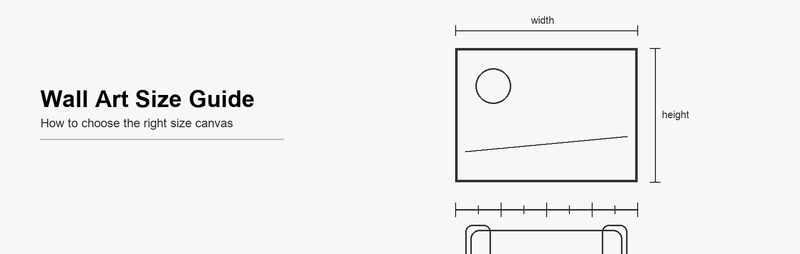
Use the two thirds rule where there is furniture to measure against. Artwork above a console or a run of units should span roughly two thirds the width below it. Full measurements are in the wall art size guide.
Coffee art is the subject where going smaller is a legitimate choice rather than a compromise. A large cup can look odd, because the eye knows the real object is small and a five foot espresso reads as a poster rather than as a picture.
Layout options, including multi-panel sets, are chosen on the product page. Bean and roast pieces split across panels comfortably, since the subject is already a repeating texture. A single cup is better as one canvas, because a panel gap through the vessel cuts the only object in the frame.
Start with Coffee Wall Decor. For the wider category of food and drink treated the same way, Food Wall Art. For close-up objects beyond the kitchen, Still Life Wall Art. If the palette is the appeal, Brown Wall Art, and for the room itself, Kitchen Wall Decor.
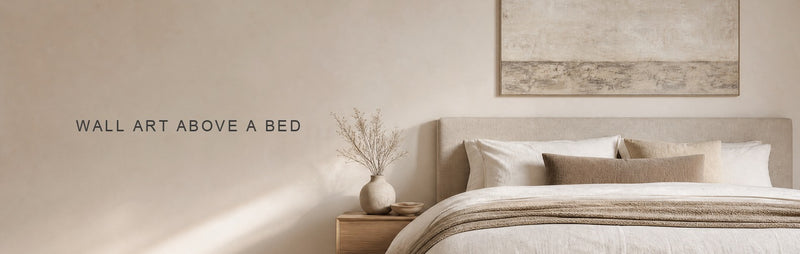
For sizing and height in a room where people sit, see dining room wall art ideas, and for a working room where the quiet palette lands well, wall art above a bed covers the same placement arithmetic.
Quick answers
Still life photography of coffee, shot close up. It divides into three treatments: the cup, usually with steam; the pour and the latte foam, which catch a moment; and the beans, which are really texture and repetition studies.
Because the subject is already close up, so there is no horizon or distance to lose when the image is printed small. That makes it legible at sizes where a landscape or a map would collapse, which suits the narrow broken wall runs a kitchen actually has.
Brown, cream and black, with occasional warm wood. The range is narrow, which is why it is easy to live with: brown reads closer to a neutral than to an accent, so it sits against white, grey, sage, navy or terracotta without arguing.
Yes, and a kitchen is its natural home, but canvas is not rated for humid conditions. Hang it on a dry wall away from the steam and splash zone directly above a hob or kettle rather than immediately over them.
Small is a legitimate choice here rather than a compromise. The eye knows a cup is a small object, so a very large print reads as a poster instead of a picture. A pair or trio of modest pieces often works better than one big one.
Shop this guide
Every collection this guide mentions. Each one opens on artwork printed to order on museum-quality canvas.
Pieces shown above
Every piece this guide shows, printed to order on museum-quality canvas.
 Steaming Coffee Cup with Roasted Beans Canvas Wall ArtFrom $69.95
 Cup of Coffee with Heart-shaped Foam Panoramic Canvas Wall ArtFrom $98.95
 Coffee Beans and Ground Coffee Canvas Wall ArtFrom $69.95
 Steaming Coffee by Fireplace Canvas Wall ArtFrom $69.95
 Three Wooden Bowls of Coffee Beans Vertical Canvas Wall ArtFrom $99.95
Keep reading
Guides that pick up where this one stops.