





Digital Art Wall Art: Rendered, Not Photographed
Digital art wall art describes how a picture was made, not what it shows. It is rendered in software rather than captured by a camera, which means the scene never existed and nothing in it had to be physically possible. That is the whole appeal and the whole limitation.
Knowing that changes what you look for, because a rendered image and a photograph fail in different ways when they are enlarged onto canvas.

Rendered, not photographed
A photograph records light that actually hit a sensor. A rendered image is built: geometry, materials and virtual lights, calculated into a picture. Nothing was there.
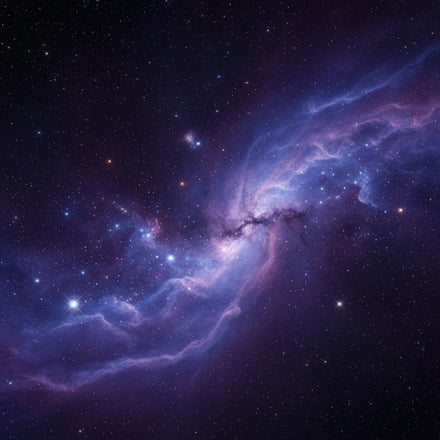
The practical consequence is freedom of subject. Alien worlds, impossible cities, planets seen from angles no craft has reached, deep space with the colors pushed. None of that can be photographed, which is precisely why this category exists rather than being a stylistic preference. Digital Art Wall Art is the range.

Space is where rendering earns its place
Most of this range is space and planetary work, and that is not a coincidence. Real astrophotography is limited to what telescopes can reach and is usually noisy, faint and monochrome before processing.
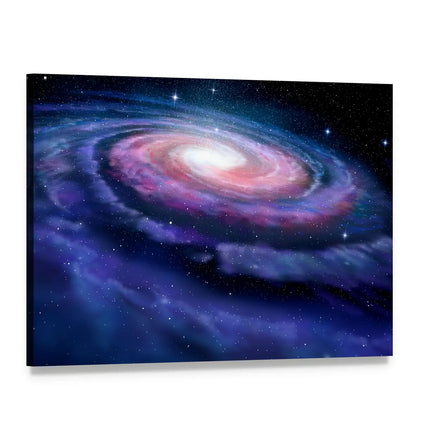
A rendered planet has none of those limits. It can be lit from any angle, placed at any distance and given a surface that reads clearly at 48 inches wide. For a large canvas that matters more than authenticity does, because the piece has to hold up at arm's length. Space Wall Art holds both the rendered and the photographic versions of the subject.

Rendered images enlarge better than photographs
This is the concrete advantage and it is worth knowing. A photograph has a fixed resolution decided when the shutter fired, plus grain, plus whatever the lens did at the edges. Enlarge it far enough and all three show.
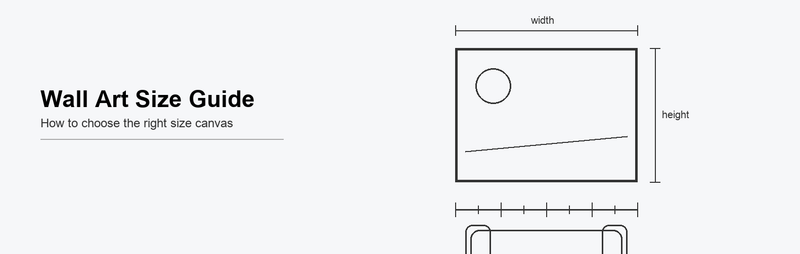
A render is generated at whatever size is asked for, with no grain and no lens softness, so the largest sizes stay clean. If you want a piece at the top of the range, 82 x 42 inches or a wide panoramic, a rendered image is the safer choice than a photograph of the same subject. The size guide covers choosing the size first.

The failure mode is smoothness
Where rendering loses to photography is texture and imperfection. Real surfaces have dust, scratches, uneven wear and atmospheric haze, and a render that skips those reads as plastic, particularly on rock, skin and water.
So the ones worth buying are the ones with deliberate imperfection: haze in the distance, grain in the shadows, a surface that is not uniformly clean. If a rendered piece looks flat on screen it will look flatter at 48 inches, because a canvas shows the whole image at once in a way a phone does not. Photography Wall Art is the alternative when texture matters more than freedom of subject.

Where it suits a room, and where it does not
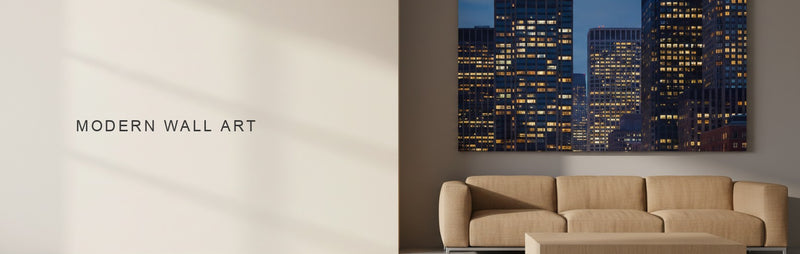
Rendered work is graphic and clean, so it goes into a modern room easily: plain walls, simple furniture, little pattern. It reads as deliberate there in a way a soft landscape sometimes does not.
It struggles in a room built on texture, exposed brick, worn timber, layered textiles, because the smoothness of the render argues with everything around it. In that room a photograph of the same subject usually sits better. The modern wall art guide covers the room type this suits.
Sizing and multi panel
Use the usual proportion, about two thirds the width of the furniture below, so roughly 48 inches above a 72 inch sofa, with the center 57 to 60 inches from the floor. Horizontal work runs 1 Piece, 3 Horizontal, 4 Pop, 5 Star and 5 Pop from 24 x 16 to 82 x 42 inches.
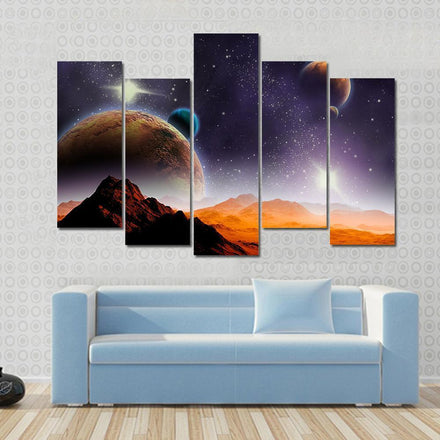
Multi panel suits rendered space subjects well, because the black between objects gives the seams somewhere harmless to land. It suits a rendered single object badly for the usual reason: the seam cuts the shape. And since rendering has no resolution ceiling, this is one of the few categories where going to the very top of the size range carries no image quality penalty at all. The multi panel comparison covers the trade.
Quick answers
Common Questions
What is digital art wall art?
Artwork built in software rather than captured with a camera: geometry, materials and virtual lights calculated into an image. The scene never physically existed, which is why the category holds alien worlds, impossible cities and planets seen from angles no craft has reached.
Does digital art print well on canvas?
Better than photography at large sizes. A photograph has a fixed resolution set when the shutter fired, plus grain and lens softness at the edges, all of which show when enlarged. A render is generated at whatever size is needed, with none of those, so the biggest formats stay clean.
How can I tell rendered art from a photograph?
Look for imperfection. Real surfaces carry dust, scratches, uneven wear and atmospheric haze. A render that skips those reads as smooth or plastic, especially on rock, skin and water. The best rendered pieces add haze and grain back deliberately, which is what makes them convincing.
Which rooms suit digital art?
Modern rooms with plain walls, simple furniture and little pattern, where its graphic cleanness reads as deliberate. It struggles in rooms built on texture such as exposed brick, worn timber and layered textiles, where the smoothness argues with everything around it and a photograph sits better.
Is digital art the same as AI generated art?
No. Digital art means built in software, which covers decades of rendering and illustration done by hand with digital tools. AI generation is one recent method within that, not the whole category. A rendered planet made in 3D software is digital art and involves no AI at all.
Shop this guide
The collections in this guide
Every collection this guide mentions. Each one opens on artwork printed to order on museum-quality canvas.


Pieces shown above
The pieces in this guide
Every piece this guide shows, printed to order on museum-quality canvas.



Keep reading
Read next
Guides that pick up where this one stops.