

THURSDAY SALE! • EXTRA 10% OFF + FREE SHIPPING DEAL | CODE: THURSDAY10
THURSDAY SALE! • EXTRA 10% OFF + FREE SHIPPING DEAL | CODE: THURSDAY10

Elephant wall art splits three ways, and the versions have almost nothing in common. There is the nursery elephant, cartoon soft and often in a bathtub. There is the decorative elephant, colorful or geometric. And there is the wildlife elephant, a silhouette against a sunrise. Only the third is a photograph of an animal.
Search the term and the results interleave without warning. Framed baby elephants in bubble baths for a child's room. Cut metal and carved wood elephants, which are objects rather than pictures. Bright abstract and mandala treatments. And genuine wildlife photography.
They are bought by different people for different rooms. A nursery elephant is chosen for softness. A metal elephant is chosen as a sculptural object. A wildlife elephant is chosen the way any landscape is chosen, for the light and the composition.
Everything here is the third kind, printed on canvas. There are very few baby elephants, no metal or carved pieces and no abstract treatments, which is worth knowing before browsing.

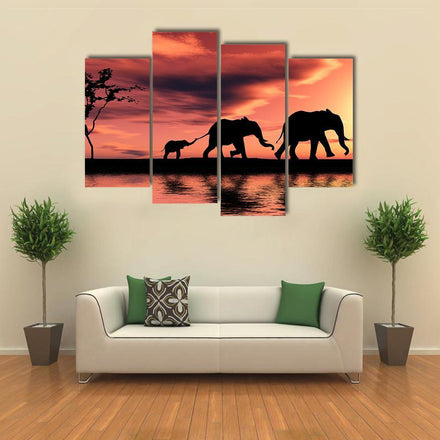
Well over half of these pieces are shot at sunrise or sunset, and most of those reduce the animal to a silhouette. Silhouette of Two Elephants in the Sunset and Herd of Elephants at Sunset are the type.
It is the right way to photograph the subject and there is a technical reason. An elephant is gray, and gray photographs flat in daylight. Backlit against a low sun, the animal becomes a solid dark shape with an unmistakable outline, and all the color moves into the sky behind it.
The consequence on a wall is that these behave like sunset pieces rather than like animal pictures. The dominant color is orange and gold, not gray, so they sit with warm rooms and they carry the same weight as any other golden hour landscape.

Elephants are one of the few animals whose social structure is part of their popular meaning. The family group, the mother and calf, the herd moving together: these read as loyalty, protection and belonging rather than as wildlife.
That is why so much of this subject is a group rather than a single animal, and it is a genuine decorating consideration rather than sentiment. Elephant Family Silhouette in a living room or dining room reads as togetherness. A lone elephant on a horizon reads as solitude, which is a completely different mood in the same palette.

The two species look different and the settings differ more. African elephants are larger with much bigger ears and appear in open savanna, which gives wide horizons and space around the animal.
Asian elephants are smaller eared and photograph in forest, river and working contexts. Group of Elephants in Thailand is that version: closer, greener and more enclosed, with none of the open horizon that makes the savanna silhouette work.
If the appeal is the sunset silhouette, the savanna version is the one that delivers it, because the composition depends on an uninterrupted horizon behind the animal.

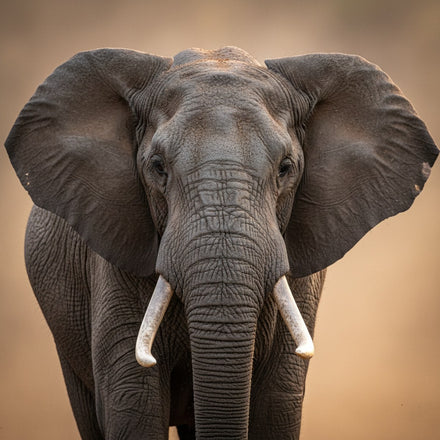
Close up portraits, the tusk and eye and wrinkled skin studies, are a significant part of this market and are not part of this collection. Neither are the bright decorative treatments, the mandala and geometric versions, or the nursery pieces that make up much of what ranks for the term.
Stating that is more useful than implying otherwise. If a soft pastel baby elephant for a nursery is the goal, a general retailer serves it better.

A silhouette composition needs room around the animal, so it suits going wider rather than taller. A single canvas at 36 by 24 or 48 by 32 inches works, and a panoramic format up to 60 by 20 inches suits a herd strung out across a horizon particularly well.
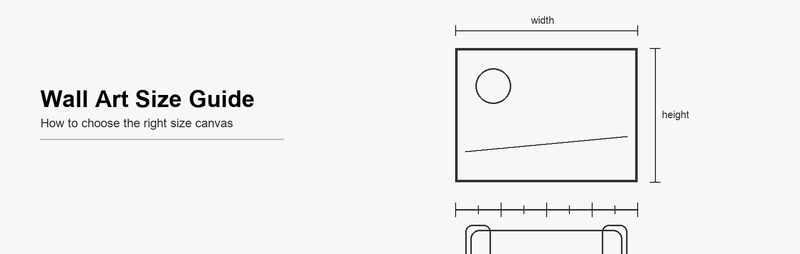
Avoid cropping tight. The silhouette only reads if there is clear sky around the outline, and at small sizes a distant herd becomes indistinct. Over furniture, span roughly two thirds the width with a six to eight inch gap. Measurements for every layout are in the wall art size guide, and the case for scaling up is in large wall art guide.
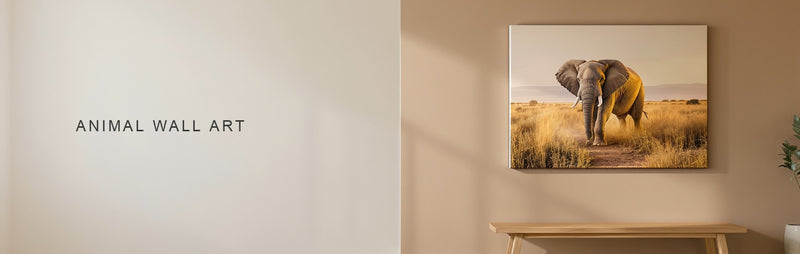
Start with Elephant Wall Art, and for the wider subject including big cats, birds and deer, Animal Wall Art.
Because these read as sunset pieces first, Sunset Wall Art is the closest match on palette. For a herd across a wide wall, Panoramic Wall Art, and for the same subject at scale, Large Wall Art.
Every piece is printed to order on museum-quality canvas with archival inks that resist fading, stretched over a solid wooden inner frame and delivered ready to hang.
Quick answers
Because an elephant is gray and gray photographs flat in daylight. Backlit against a low sun the animal becomes a solid dark shape with an unmistakable outline, and the color moves into the sky. The result behaves like a sunset piece rather than an animal picture.
Family bonds, protection and loyalty, drawn from the animal's real social structure. That is why groups appear more often than single animals. A family group reads as togetherness and suits a living or dining room, while a lone elephant on a horizon reads as solitude.
Yes, in setting more than in animal. African elephants have much larger ears and appear in open savanna, which gives the wide horizon the sunset silhouette depends on. Asian elephants photograph in forest and river settings, which are closer, greener and more enclosed.
Wide rather than tall. The silhouette needs clear sky around the outline to read, so a single canvas at 36 by 24 or 48 by 32 inches, or a panoramic up to 60 by 20 inches for a herd strung across a horizon. Cropping tight or going small loses the shape.
Very little. Nursery elephant art is mostly soft illustration, pastel palettes and baby elephants in whimsical settings, and it is a large part of what ranks for this term. This collection is wildlife photography at golden hour, which is a different look entirely.
Shop this guide
Every collection this guide mentions. Each one opens on artwork printed to order on museum-quality canvas.
Pieces shown above
Every piece this guide shows, printed to order on museum-quality canvas.
Keep reading
Guides that pick up where this one stops.