

MONDAY SALE! • EXTRA 10% OFF + FREE SHIPPING DEAL | CODE: MONDAY10
MONDAY SALE! • EXTRA 10% OFF + FREE SHIPPING DEAL | CODE: MONDAY10

Mandala wall art is a circular design built on radial symmetry, where every element repeats around a single center point. That structure is the reason it behaves so differently from other patterned art on a wall: the eye is pulled to the middle and held there, which is calming rather than busy.

A mandala can carry hundreds of small elements and still feel restful, which is not true of most detailed artwork.
The reason is that the detail is organized. Radial symmetry means the eye only has to understand one segment, then it recognizes the repetition and stops working. A photograph with the same amount of detail gives the eye no such shortcut, so it keeps scanning.
This is also why a mandala suits a room where you want a focal point without adding energy. A single strong circle above a bed reads as quiet, where an equally detailed landscape in the same spot would not.

Sacred and spiritual mandalas such as Sacred Lotus Mandala and Spiritual Mandala keep the traditional lotus and geometric vocabulary. These are the most formal and the most symmetrical, so they suit a room with clean lines.
Floral mandalas such as Pink Cornflower Mandala and Blue Cornflower Mandala build the pattern from petals and blooms. They read as botanical as much as geometric, which makes them the easiest to place in an ordinary living room.
Fractal and universal mandalas such as Fractal Mandala and Universum Style Mandala push into deeper repetition. They carry the most visual complexity and want the most wall around them.
Watercolor and fabric-style mandalas soften the edges. Watercolor Mandala and Fabric Style Mandala trade crispness for texture, which suits a room with linen, rattan and warm neutrals rather than one with hard modern surfaces.

A mandala is square or circular in composition. That single fact decides most of the placement question, and it is the opposite of the constraint a map or a landscape brings.
It suits the walls that wide artwork cannot use: a chimney breast, the narrow pier between two windows, the space above a console, the top of a stairwell, a square patch above a bedside table. Anywhere a wide horizontal piece would look stretched, a mandala fits.
It works less well on a long horizontal wall above a three seat sofa, where a single circle can look marooned in the middle of the space. If that is the wall, either go much larger than feels natural or use a multi-panel layout so the design spans the width.
Every piece in this collection is offered as a single canvas or as a multi-panel set, chosen on the product page. Splitting a mandala across panels is a deliberate look rather than a compromise: the panel gaps cut the circle into vertical bands, which turns one symmetrical object into a rhythm across the wall.

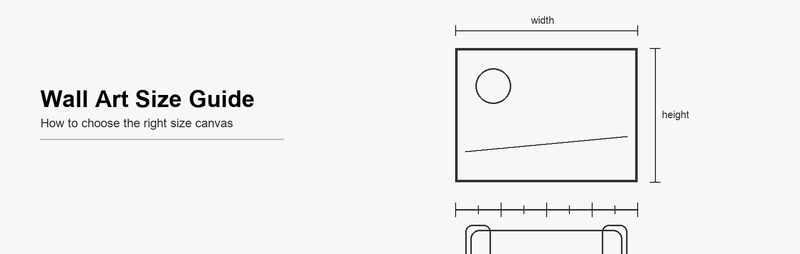
Use the two thirds rule. Artwork above a sofa, bed or console should span roughly two thirds the width of the furniture below it. A standard three seat sofa is about 84 inches wide, so the artwork above it should measure about 56 inches across. Full measurements are in the wall art size guide.
Mandalas carry one extra requirement: they must hang straight and centered. A landscape hung slightly off center reads as casual. A radially symmetric design hung off center reads as a mistake, because the composition has an obvious axis and the eye measures the wall against it.
For the same reason, a mandala rewards being hung on its own rather than in a gallery arrangement. Surrounded by other frames the symmetry stops being the point.

Mandalas exist in almost every color, so the palette decision is unusually open. That makes it worth choosing the color to match the room rather than choosing a design and hoping.
The blue and green pieces sit as cool neutrals. Green Mandala Pattern and the cornflower designs work in a room built on white, grey or natural wood. The warm and gold pieces behave as focal points and want a warm room around them.
Mandalas pair naturally with texture rather than with other pattern. Linen, rattan, jute and plaster support them. A patterned rug or patterned wallpaper competes, because both are asking the eye to read a repeat at the same time.
Start with Mandala Wall Art. For the meditative subjects the style sits beside, Yoga Wall Art and Zen Wall Art. For the pattern and symmetry without the spiritual vocabulary, Geometric Wall Art, and for the floral mandalas alongside other botanical work, Flower Wall Art.
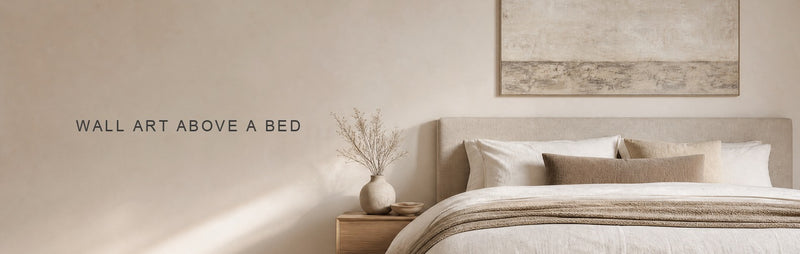
For a calm room built around one quiet focal piece, see wall art above a bed, and for hanging a single piece at the right height, dining room wall art ideas covers sizing and height for a seated room.
Quick answers
A circular design built on radial symmetry, where elements repeat around a single center point. Styles range from sacred and lotus designs to floral, fractal and watercolor treatments, but the radial structure is what they share.
Because the detail is organized. Radial symmetry means the eye only has to read one segment before it recognizes the repeat and stops working. A photograph carrying the same amount of detail offers no such shortcut, so the eye keeps scanning.
On the walls that wide artwork cannot use: a chimney breast, the pier between two windows, above a console, or a square patch above a bedside table. It is a weaker choice for a long wall above a three seat sofa, where a single circle can look marooned.
Yes, more than most artwork. A radially symmetric design has an obvious axis, so the eye measures it against the wall and reads any tilt or off-center placement as an error rather than as a casual arrangement.
Texture rather than pattern. Linen, rattan, jute and plaster support it. A patterned rug or patterned wallpaper competes with it, because both ask the eye to read a repeating design at the same time.
Shop this guide
Every collection this guide mentions. Each one opens on artwork printed to order on museum-quality canvas.
Pieces shown above
Every piece this guide shows, printed to order on museum-quality canvas.
Keep reading
Guides that pick up where this one stops.