

MONDAY SALE! • EXTRA 10% OFF + FREE SHIPPING DEAL | CODE: MONDAY10
MONDAY SALE! • EXTRA 10% OFF + FREE SHIPPING DEAL | CODE: MONDAY10

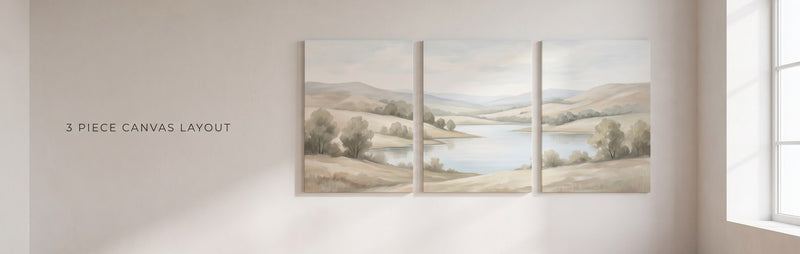
A multi panel canvas set covers more wall than its panels suggest, because the gaps count toward the total width. A 3 piece set of 16 inch panels with half inch gaps spans 49 inches, not 48, and the listed size already includes those gaps. Get that arithmetic right before ordering.
This page covers the three formats we carry as sets, what each one spans, and which wall each suits.

| Format | Panel arrangement | Typical total span | Suits |
|---|---|---|---|
| 3 piece | Three equal vertical panels in a row | Roughly 40 to 60 in | Above a loveseat or a queen bed |
| 4 square | Two by two grid of square panels | Roughly 34 to 63 in wide and tall | A square alcove or a wall between windows |
| 5 panel | Five panels, center tallest, stepping down | Roughly 60 to 80 in | Above a full sofa or a king bed |
| Panoramic single | One very wide piece | Up to 60 by 20 in | A long low wall, no gaps to plan |
Treat those spans as the shape of the decision, not as a quote. Confirm the exact finished dimensions on the product page before ordering, because the ladder differs by piece.

Artwork above furniture reads best at about two thirds the width of the furniture below it. A 72 inch sofa wants roughly 48 inches of art, an 84 inch sofa wants about 56, and a 96 inch sofa wants about 64. Work out that number first, then choose the format that reaches it.
This is why the 5 panel format exists. Very few single canvases reach 64 inches, but five panels with gaps clear it comfortably.
Every Tiaracle set is designed on a half inch gap, and the overall size on the product page is calculated with it: a 49 x 32 inch 3 Horizontal set is three 16 inch panels and two half inch gaps. Wider gaps make a set read as separate pieces and push it past the size you measured for; the half inch is close enough that the eye completes the picture across the break. The printed hanging guide for each layout includes a half inch strip to use as a spacer.
Whatever gap is chosen has to be identical between every pair of panels. An uneven gap is the single most visible mistake in a multi panel hang, more visible than the set being slightly off center.

A two by two grid is the only multi panel arrangement that is as tall as it is wide, which makes it the answer for square wall space where a horizontal set would look stranded. It also suits a subject with no strong horizontal axis.
Because it is square, it does not follow the two thirds rule the same way. Match it to the height of the space as much as to the width.

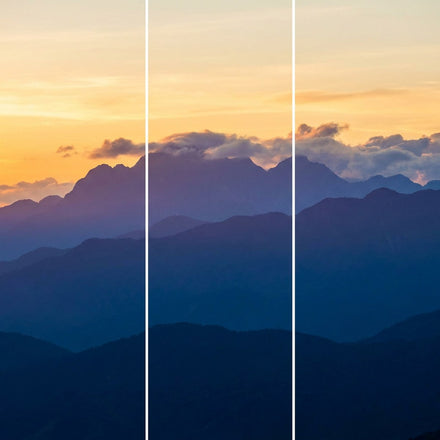
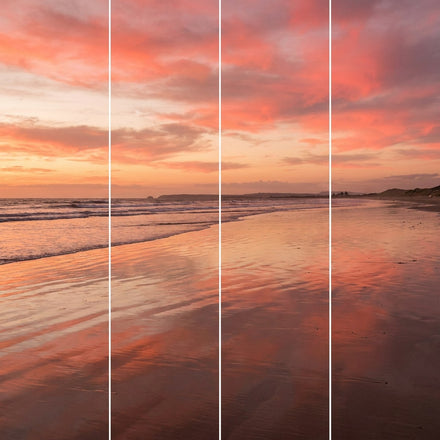
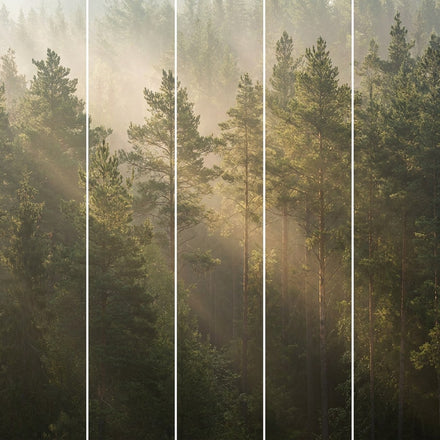
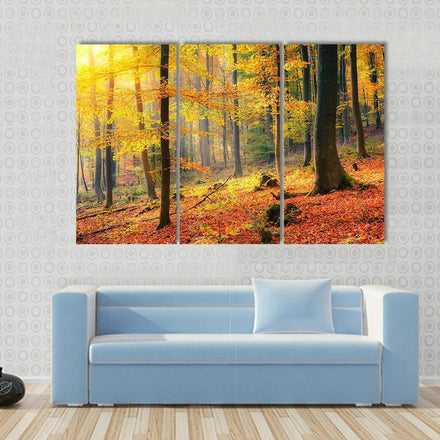
An image with natural vertical breaks splits well: a skyline with gaps between towers, a forest, a coastline, an abstract with vertical movement. An image with one central subject does not, because a panel edge lands through the middle of the thing you are looking at.
Check where the divisions fall before choosing a multi panel version of a piece with a single focal point.

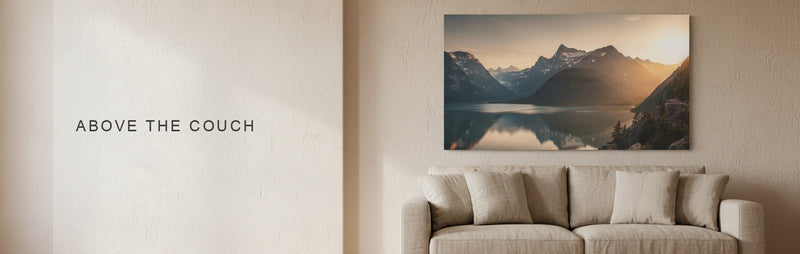
By format: 3 Piece Wall Art, 4 Panel Wall Art, 5 Piece Canvas Art, Square Wall Art and Panoramic Wall Art, all listed together on the layout hub. The 3 piece arrangement guide covers spacing and hanging, and wall art above a couch covers the most common wall for a set.
Quick answers
Yes, and our listed sizes already include them. Three 16 inch panels with half inch gaps span 49 inches on the wall, not 48, and 49 x 32 is exactly the size on the product page. Compare the listed size, gaps included, to the wall or the furniture below it.
About two thirds the width of the sofa. A 72 inch sofa wants roughly 48 inches of art, an 84 inch sofa about 56 inches, and a 96 inch sofa about 64 inches. Work out the target width first, then pick a format that reaches it.
Half an inch, and the listed size already includes it. Wider gaps make the set read as separate pieces and push it past the size you measured for. The important part is that every gap is identical, which is more visible than being slightly off center.
When the wall space is as tall as it is wide. A two by two grid is the only multi panel arrangement that fills square space, and it suits subjects with no strong horizontal axis. Match it to the height of the space as well as the width.
Anything with one central subject, because a panel edge will land through the middle of it. Skylines, forests, coastlines and abstracts with vertical movement all split well, since they have natural vertical breaks for the divisions to fall into.
Shop this guide
Every collection this guide mentions. Each one opens on artwork printed to order on museum-quality canvas.
Pieces shown above
Every piece this guide shows, printed to order on museum-quality canvas.
Keep reading
Guides that pick up where this one stops.