WEEKEND SALE! • EXTRA 10% OFF + FREE SHIPPING DEAL | CODE: WEEKEND10
WEEKEND SALE! • EXTRA 10% OFF + FREE SHIPPING DEAL | CODE: WEEKEND10

New York wall art is mostly bridges. Skylines get the attention, but the Brooklyn, Verrazano, George Washington, Hell Gate and Triboro crossings appear far more often, and a bridge behaves quite differently on a wall than a skyline does, because it gives the eye somewhere to travel.

A skyline is a band of buildings across the middle of the frame. It is recognizable, but compositionally it is a horizontal stripe with sky above and water below.
A bridge gives the photographer structure to work with. Cables and towers create diagonals, the span leads the eye from one side of the frame to the other, and the arch or suspension curve gives the image a shape rather than a line. Brooklyn Bridge and Manhattan Skyline works because it has both: the bridge supplies the composition and the skyline supplies the recognition.
For a room this matters. A bridge picture has somewhere for the eye to travel, which holds attention longer than a skyline that is read in one glance.

Two quite different subjects share the name, and the difference is worth knowing before you browse.
The city is what most people mean: Manhattan, Brooklyn, Central Park, the bridges, and the skyline at night. Hard architecture, strong verticals, and usually a dark palette with lit windows.
The state is landscape. Fall Foliage by Lake George, American Side of Niagara Falls and Montauk Lighthouse at Dusk are green, gold and blue, and they have nothing to do with a city at all.
If you want the recognizable New York, search the city subjects. If you want a landscape that happens to be in New York, the state work is the better and much quieter choice.

Most city work here is shot after dark. New York Night Skyline and Manhattan at Night put lit windows against a black sky, which is the image the city is known for.
A dark picture needs a well lit wall. In a dim room a night skyline turns into a black rectangle with a few points of light, and everything that made it worth choosing disappears. That is the single most common mistake with this subject.
The daytime and dusk pieces are the answer for a darker room. Bow Bridge in Central Park and the fall foliage work carry enough mid tone to survive lower light.

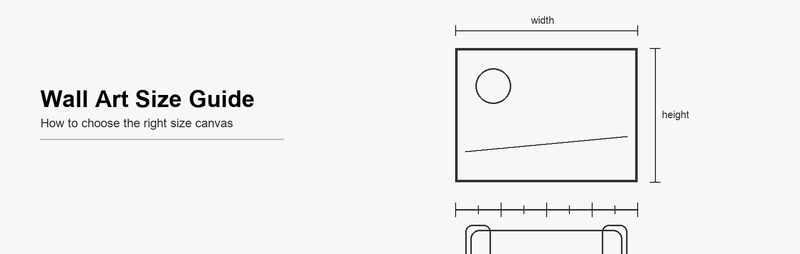
Use the two thirds rule. Artwork above a sofa, bed or console should span roughly two thirds the width of the furniture below it. A standard three seat sofa is about 84 inches wide, so the artwork above it should measure about 56 inches across. Full measurements are in the wall art size guide.
Skylines and bridges are both wide subjects, so this is a category where a panoramic format is often the right answer rather than a stylistic one. Several pieces here are shot that way, including Brooklyn Bridge and Manhattan Skyline and New York Night Skyline.
Go large with a night skyline. The subject is a field of small lit windows, and at modest size those merge into an indistinct glow rather than reading as a city.
Every piece in this collection is offered as a single canvas or as a multi-panel set, chosen on the product page. A wide skyline splits across panels well, because the gaps fall between buildings. A single bridge is better as one canvas, since a panel gap through the span cuts the line the whole composition is built on.

A living room with good light suits the night skylines, where the dark palette reads as dramatic rather than murky.
A home office or study suits the bridges. They are structural and graphic, and the diagonals give the eye something to do without adding color.
A hallway takes the panoramic work particularly well, since a long wall and a long subject are a natural fit.
A bedroom is better served by the state landscapes than the city. A lit skyline is an energetic image for the wall you look at last.
Start with New York Wall Art. For skylines of other cities, Skyline Wall Art. Since bridges dominate this subject, Bridge Wall Art is the natural next stop. For street level rather than skyline, City Wall Art, and for the wider country, United States Wall Art.
For a long wall where panoramic work belongs, see hallway wall art ideas, and for sizing above furniture, dining room wall art ideas.
Quick answers
Two subjects sharing a name. The city means Manhattan, Brooklyn, Central Park, the bridges and the night skyline. The state means landscape: Lake George, Niagara Falls, Montauk and autumn foliage, which look nothing like a city.
Because a bridge photographs better than a skyline. Cables and towers create diagonals, the span leads the eye across the frame, and the curve gives the image a shape. A skyline is compositionally a horizontal stripe, recognizable but read in a single glance.
No, and this is the most common mistake with the subject. In low light a night skyline becomes a black rectangle with a few points of light. Choose a daytime or dusk piece such as Central Park or the autumn landscapes, which carry enough mid tone to survive.
Large, and preferably panoramic. The subject is a field of small lit windows, and at modest size those merge into an indistinct glow instead of reading as a city. Skylines and bridges are both wide subjects, so the format is functional rather than stylistic.
Usually not. A panel gap through the span cuts the line the whole composition is built on. A wide skyline is the opposite and splits well, because the gaps fall between buildings.
Shop this guide
Every collection this guide mentions. Each one opens on artwork printed to order on museum-quality canvas.
Pieces shown above
Every piece this guide shows, printed to order on museum-quality canvas.
Keep reading
Guides that pick up where this one stops.