

TUESDAY SALE! • EXTRA 10% OFF + FREE SHIPPING DEAL | CODE: TUESDAY10
TUESDAY SALE! • EXTRA 10% OFF + FREE SHIPPING DEAL | CODE: TUESDAY10

Pakistan wall art is mostly architecture. Mosques and Mughal forts dominate the range, and the second group is the northern mountains and glacial lakes. Knowing that split before browsing saves time, because the two look nothing alike and suit completely different rooms.
The architecture is symmetrical, warm and detailed. The mountains are cold, wide and empty. Very little sits between them.

Badshahi Mosque in Lahore and Faisal Mosque in Islamabad appear more than any other subject. They are photographed at every hour, and the hour changes the picture more than the building does: dusk gives warm sandstone against a deep sky, midday gives white marble and hard shadow.
Faisal Mosque is the modern one, all angles and white concrete against the Margalla Hills. Badshahi is the Mughal one, red sandstone and domes. If you want warmth choose Badshahi at dusk; if you want a clean geometric piece choose Faisal. Pakistan Wall Art holds both, and Islamic Wall Art covers the wider religious architecture.

The fort and the Samadhi of Ranjit Singh beside it give a different register from the mosques: less symmetry, more texture, and a lot of worn brick. Several are shot as monochrome studies, which suits the subject because the interest is in the stonework rather than the color.
A monochrome fort study is the easiest piece here to place in a modern room, since it carries no palette of its own. Architecture Wall Art and Black and White Wall Art hold the same treatment across other subjects.

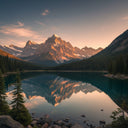
K2, the Karakoram treks and Attabad Lake make up the landscape half. Attabad is the one people recognize without knowing the name: an unnaturally turquoise lake held between bare brown mountains, formed by a landslide in 2010.
That color contrast is why it works on a wall. There is no green in the frame at all, so the turquoise has nothing to compete with. Lake Wall Art and Mountain Wall Art hold the wider versions of both subjects.

Flag artwork is its own category and it behaves differently from a landscape. It is read instantly, it carries an explicit statement, and it suits an office, a hallway or a study more comfortably than a living room where guests sit facing it.
Grunge and texture treatments are the common form here rather than a flat flag, which reads as artwork rather than as signage. That distinction matters if the piece is going somewhere it will be seen daily.
Mosque architecture at dusk is warm and symmetrical, which suits a dining room or a hallway where the piece is seen straight on. Symmetry rewards a centered hang. The northern landscapes are cold and wide, which suits a living room or a study where the eye travels across the frame.
A monochrome fort study is the flexible one and will sit almost anywhere. The living room guide covers sightlines, and the dining room guide covers the lower seated eye line.

A mosque photographed straight on is a symmetrical subject, and symmetry needs the whole building in frame to work. Cropping a dome ruins it. That argues for width: horizontal work runs 1 Piece, 3 Horizontal, 4 Pop, 5 Star and 5 Pop, from 24 x 16 up to 82 x 42 inches.
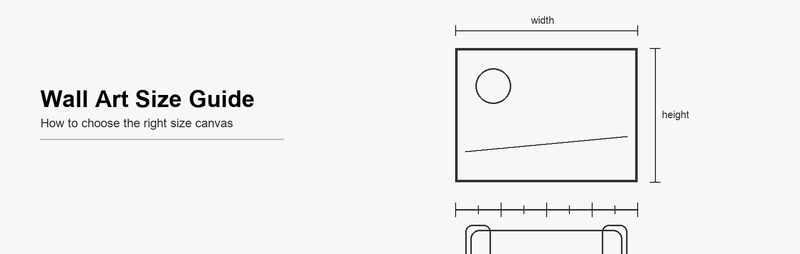
Panoramic covers 36 x 12 to 73 x 24 and suits a mountain range better than a building. Size to about two thirds the width of the furniture below and hang the center 57 to 60 inches from the floor. The size guide has the method.
Quick answers
Mosque architecture, by a wide margin. Badshahi Mosque in Lahore and Faisal Mosque in Islamabad appear more than any landscape. The second group is the northern mountains and glacial lakes, chiefly K2 and Attabad Lake. There is very little between those two categories.
Period and palette. Badshahi is Mughal, built in red sandstone with domes, and photographs warm at dusk. Faisal is modern, white concrete and hard angles against the Margalla Hills, and photographs as a geometric study. Choose Badshahi for warmth and Faisal for a clean contemporary piece.
Glacial silt. The lake formed after a landslide in 2010 dammed the Hunza River, and suspended rock flour scatters light toward turquoise. The surrounding mountains are bare brown rock with no vegetation, so nothing in the frame competes with the color, which is why it reads so strongly on a wall.
Somewhere it is seen straight on. Mosque photography is symmetrical, and symmetry rewards a centered hang at a fixed viewing angle, which makes a dining room, a hallway or a stairwell landing better than a corner. Keep the whole building in frame; a cropped dome loses the symmetry that makes the picture work.
Wide. A Karakoram range continues past both edges of the frame, so the wider the piece the more the composition reads correctly. Panoramic from 36 x 12 to 73 x 24 inches suits it better than a standard rectangle. Size to roughly two thirds the furniture width below, with the center 57 to 60 inches from the floor.
Shop this guide
Every collection this guide mentions. Each one opens on artwork printed to order on museum-quality canvas.
Pieces shown above
Every piece this guide shows, printed to order on museum-quality canvas.
Keep reading
Guides that pick up where this one stops.