

MONDAY SALE! • EXTRA 10% OFF + FREE SHIPPING DEAL | CODE: MONDAY0
MONDAY SALE! • EXTRA 10% OFF + FREE SHIPPING DEAL | CODE: MONDAY0

Personalized wall art means two different products and the difference decides where you shop. One is your own photograph printed on canvas. The other is a stock design with a name or a date set into it. Tiaracle prints the first and does not make the second.
Knowing which you want settles the search in about a minute, because the two are sold by different shops and priced on different things.

A photo canvas takes an image you already own and prints it. What you are buying is the print quality and the stretcher, and the artwork is yours.
A name design is the opposite. The artwork is the shop's, usually typography or a simple illustration, and your name, date or coordinates are set into a slot in it. That is a design service, and it is where most of the wedding, family and anniversary pieces come from. Custom Wall Art is the photo route here: you upload the image and choose the layout.

Everything else is recoverable. A crop can be adjusted, a layout can be changed, a size can be reconsidered. A file that is too small cannot be made bigger, and it is the single most common reason a custom print disappoints.
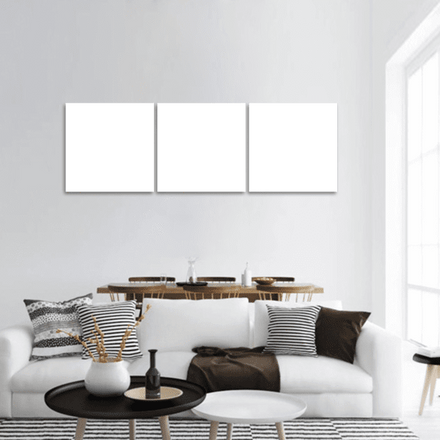
The requirement scales with viewing distance rather than being one fixed number, because a large canvas hangs further from the eye. Use roughly 150 DPI up to 20 inches, 120 DPI to 40 inches, 100 DPI to 60 inches and 75 DPI above that. In practice a 3 panel set at 25 x 16 inches wants about 3,000 x 1,920 pixels, and a single panel at 48 x 32 inches wants about 4,800 x 3,200, which a 12 megapixel phone photo just misses.

A single panel keeps the image whole and is the safe answer for a portrait, a group shot or anything with a face near the middle. Nothing gets cut.
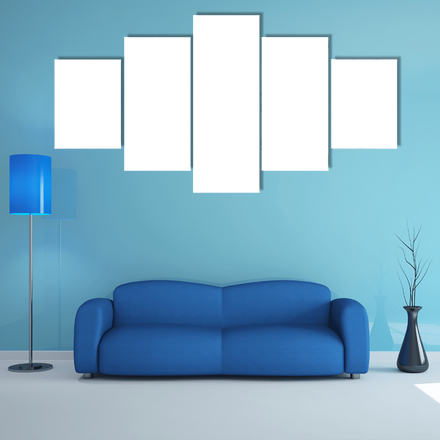
A split across three, four or five panels suits a wide landscape, a skyline or a beach, where the interest runs along the frame and the gaps land in open sky or water. It is the wrong choice for a face, because a seam through a head is the one split nobody forgives. The multi panel comparison covers the trade, and the 3 piece arrangement guide has the spacing.
Four things, in order. Open the file at full size and look at the corners, because phone photos are often soft at the edges. Check the orientation matches the layout you picked. Check nothing important sits where a seam will fall on a split layout. And check the crop, since a canvas is a fixed shape and your photo probably is not.
One thing worth knowing in advance: a custom piece is printed from your image and cannot be resold, so custom orders are not returnable or exchangeable. Damaged or incorrect orders are still put right. That is a stronger reason than usual to check the file rather than the mockup.

Demand for this term roughly doubles in December against its yearly average, which tells you what it is mostly bought for. A photo canvas is a gift far more often than it is a purchase for your own wall.
The practical consequence is lead time. Everything is printed to order, so a December delivery is an October or November decision, and the file has to be found and checked before that. Gathering the photograph is usually the slow part, not the printing. For a wall you are furnishing rather than a gift you are giving, the same rules apply without the deadline.

If the photograph does not exist, or exists only as a low resolution file from a phone a decade ago, a stock landscape will look better on the wall than a stretched snapshot. That is not a consolation prize, it is the honest comparison.
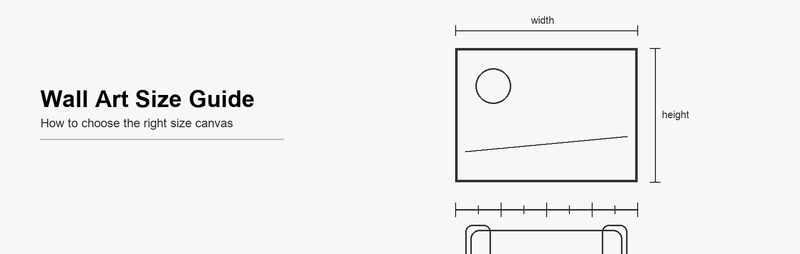
The other case is a room where the artwork has a job to do visually rather than personally, a hallway, a rental, a room you are staging. There a measured palette matters more than the subject. Photography Wall Art and Abstract Wall Art are where to look, and the size guide covers fitting either to the wall.
Quick answers
It scales with size, because a large canvas hangs further away. Use about 150 DPI up to 20 inches, 120 DPI to 40 inches, 100 DPI to 60 inches and 75 DPI above. A single panel at 48 x 32 inches wants roughly 4,800 x 3,200 pixels, which a 12 megapixel phone photo just misses.
Not on a Tiaracle canvas. Name and date overlays are a design service, where the artwork belongs to the shop and your text drops into a slot in it. Tiaracle prints the image you upload, so the artwork is yours and nothing is added to it.
One canvas for anything with a face, because a seam through a head is the split nobody forgives. A split across three, four or five panels suits wide landscapes, skylines and beaches, where the interest runs along the frame and the gaps fall in open sky or water.
No. A custom piece is printed from your own image and cannot be sold to anyone else, so custom orders are not returnable or exchangeable. Damaged or incorrect orders are still put right. That makes checking the file, the crop and the orientation before ordering worth the extra few minutes.
Treat a December gift as an October or November decision. Demand for this term roughly doubles in December, everything is printed to order, and production plus transit both need room. Finding and checking the photograph is usually slower than the printing, so start there.
Shop this guide
Every collection this guide mentions. Each one opens on artwork printed to order on museum-quality canvas.
Pieces shown above
Every piece this guide shows, printed to order on museum-quality canvas.
Keep reading
Guides that pick up where this one stops.