






Still Life Wall Art: Fruit, Flowers and Objects
Still life wall art is a picture of arranged objects: fruit and vegetables on a table, flowers in a vase, or instruments and tools with a story. Choose fruit and vegetables for a kitchen or dining room, flowers for a bedroom or hallway, and objects such as a compass or chess pieces for a study.
The still life wall art range follows the four groups the genre has always had, and this guide takes them in turn. It then sets the classical dark-ground still life against the bright modern kind, and says where each hangs and at what size.

What still life wall art is, and its four types
A still life is a picture of things that do not move, arranged by the artist. The term comes from the Dutch stilleven of the 1600s, when Dutch and Flemish painters made the genre their own. Four types cover almost everything painted since: the flower piece, a bouquet in a vase; the food or banquet piece, fruit, bread, vegetables, fish and drink on a table; the vanitas, objects such as a skull, a candle or an hourglass that stand for the shortness of life; and the everyday-object piece, tools, instruments, books and kitchenware chosen for their shapes. On canvas the food piece and the flower piece are the two that sell, because they carry color and belong in specific rooms.

Fruit and vegetables are the kitchen and dining pictures
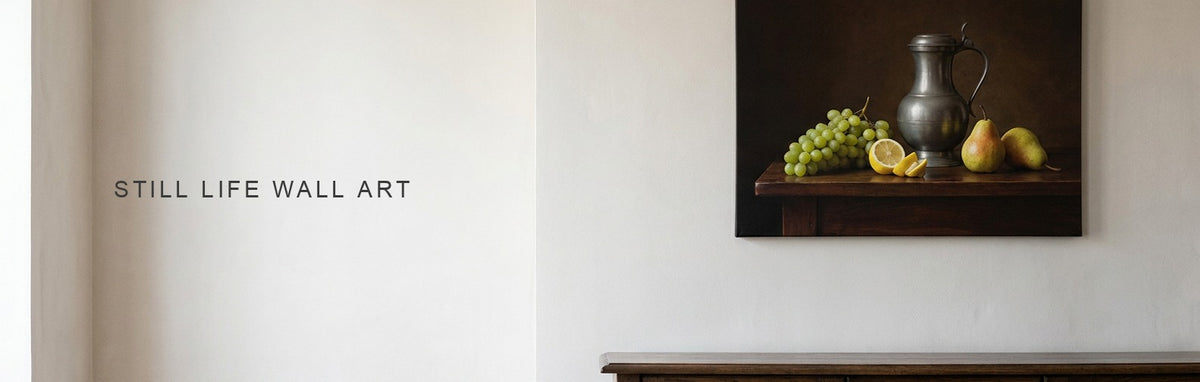
Grapes, pears and a cut lemon beside a pewter pitcher; olives and produce on a board; a pineapple in sunglasses with citrus; fresh green vegetables. The food still life has hung in dining rooms since Chardin painted bread and peaches in the 1700s, and it does the same job now: it says what the room is for without a word. The classical versions, with a dark background and one light source from the side, suit a traditional dining room and dark wood furniture. The bright, flat modern versions, a tangerine dessert or a tropical fruit bowl on white, suit a kitchen with pale units.
Hang a food still life above a sideboard or the kitchen table, at two thirds of the furniture width. A single canvas at 24 by 16 or 36 by 24 inches suits a sideboard; a 3 Horizontal set at 49 by 32 inches suits a six-seat table. Our kitchen wall art guide says which kitchen walls are safe for a canvas and which take steam.

Flowers in a vase are the bedroom and hallway pictures
Tulips, roses and peonies in a glass or ceramic vase are the flower piece, the type the Dutch made famous and the one with the widest range of color. A single bunch on a plain ground is calm enough for a bedroom, where a busy landscape would not be, and narrow enough for a hallway wall. Choose the palette from the room: variegated red and cream tulips for a warm room, white and green for a cool one. The botanical wall art guide covers the difference between a flower in a vase and a flower in a field, which is the difference between still life and landscape.

Objects with a story suit a study
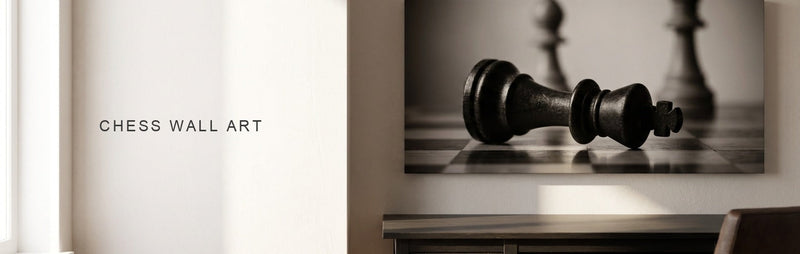
The third group is objects chosen for what they mean: a brass compass, a sextant and a spyglass on a chart; chess pieces standing on a board in monochrome; a dark blue kettle with a lemon. These are the everyday-object pieces, and they are the still lifes for a study, an office or a den, where a bowl of fruit would look out of place. The nautical set reads as travel and navigation; the chess set reads as thought; the kettle reads as home. Our chess wall art guide takes the chess pictures on their own.

Classical against modern still life
The classical still life has a dark ground, one light source from the left, and objects modeled in deep shadow, the manner of Zurbaran and the Dutch masters. The modern still life, from Cezanne's apples of the 1890s through Morandi's bottles to today's photography, flattens the space, brightens the ground and cares about the shapes more than the shadows. On a wall the classical version reads as warm and traditional and suits dark wood and deep paint colors; the modern version reads as clean and suits white walls and pale furniture. Both are compositions first, which is why still life is the genre art teachers use to explain arrangement; our composition in art guide uses the same examples.
Choosing by room
Kitchen: a bright modern fruit piece as a single canvas at 24 by 16 inches, away from the range and the sink. Dining room: a classical food piece above the sideboard, single at 36 by 24 or a 3 Horizontal set at 49 by 32. Bedroom: a flower piece at 24 by 16 above a dresser. Study: the nautical instruments or the chess pieces, single at 24 by 16 or 36 by 24. Hallway: a narrow flower piece, or a vertical canvas at 12 by 24 inches.
What to browse
Still life wall art holds all four types together; flower wall art holds the vases and the fields; and kitchen wall art and dining room wall art gather the food pieces with the other pictures that suit those two rooms.
Quick answers
Common Questions
What is still life wall art?
A canvas print of arranged, motionless objects: fruit and vegetables on a table, flowers in a vase, or instruments, books and kitchenware chosen for their shapes and meaning. The genre takes its name from the Dutch stilleven of the 1600s. On a wall, food pieces suit a kitchen or dining room, flower pieces a bedroom, and object pieces a study.
What are the four main types of still life?
The flower piece, a bouquet in a vase; the food or banquet piece, fruit, bread, fish and drink on a table; the vanitas, objects such as a skull, an hourglass or a guttering candle that stand for mortality; and the everyday-object piece, tools, instruments and kitchenware arranged for their forms. Most still life sold as wall art is the first two.
Where should still life art hang?
In the room its objects belong to. A fruit or vegetable piece hangs above a sideboard or a kitchen table; a flower piece above a bedroom dresser or along a hallway; a compass, chess or kettle piece in a study or office. Size it at two thirds of the furniture beneath, and keep a kitchen piece away from the range and the sink.
What are five classic still life objects?
Fruit, a vase of flowers, a pitcher or jug, bread, and a skull. Fruit and flowers give color, the pitcher gives a tall vertical shape, bread gives texture, and the skull is the vanitas symbol for the shortness of life. Modern still lifes swap the skull for instruments, chess pieces or kitchenware and keep the other four.
Is still life art old-fashioned?
The classical version, with its dark ground and side light, reads as traditional and suits a room with dark wood and deep color. The modern version, bright, flat and shape-led, has been current since Cezanne and suits white walls and pale furniture. The genre itself is not dated; the treatment decides which room it suits.
Shop this guide
The collections in this guide
Every collection this guide mentions. Each one opens on artwork printed to order on museum-quality canvas.

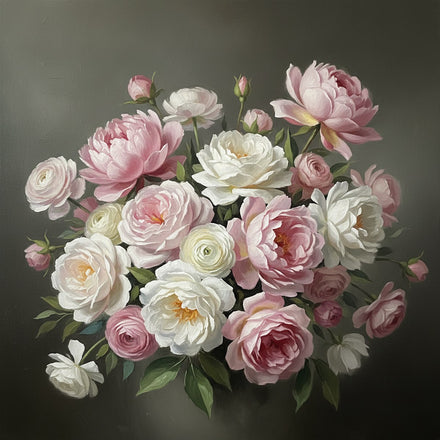

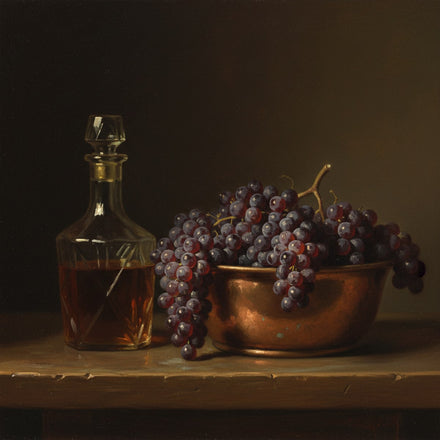
Pieces shown above
The pieces in this guide
Every piece this guide shows, printed to order on museum-quality canvas.
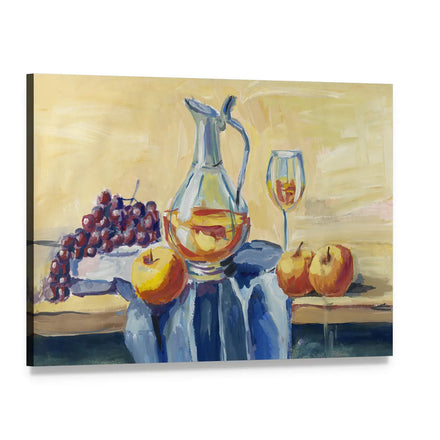 Classical Still Life with Pitcher and Fruit Canvas Wall ArtFrom $69.95
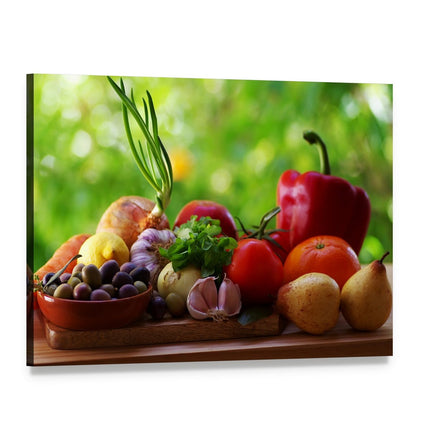 Fruits and Vegetables Still Life Canvas Wall ArtFrom $69.95
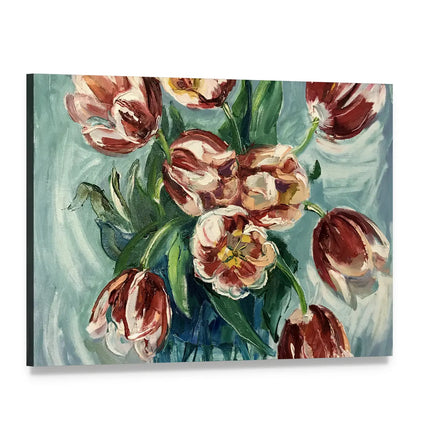 Variegated Tulips Still Life Canvas Wall ArtFrom $69.95
 Vintage Still Life with Compass and Sextant Canvas Wall ArtFrom $69.95
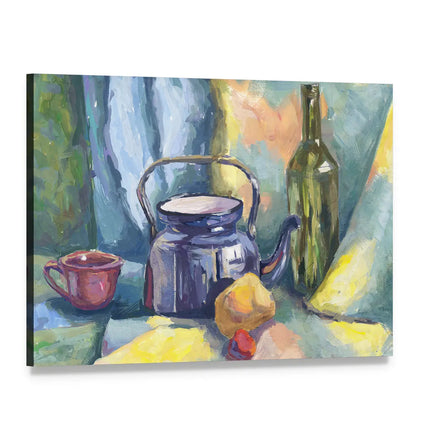 Dark Blue Kettle and Lemon Still Life Canvas Wall ArtFrom $69.95

Keep reading
Read next
Guides that pick up where this one stops.