

WEDNESDAY SALE! • EXTRA 10% OFF + FREE SHIPPING DEAL | CODE: WEDNESDAY10
WEDNESDAY SALE! • EXTRA 10% OFF + FREE SHIPPING DEAL | CODE: WEDNESDAY10

Texas wall art splits between symbols and places. The symbol kind is the state outline, the Lone Star flag, a longhorn, a pair of boots. The place kind is a photograph of somewhere real: a Dallas skyline, the Capitol in Austin, bluebonnets in the Hill Country. They are bought for different reasons.

A state outline or a flag is a statement of belonging. It works anywhere, it reads instantly, and nobody has to recognize anything. That is why so much of what sells under this term is the shape, the star and the longhorn.
A photograph of a place is narrower and more personal. It only lands if the viewer has a connection to that city, that river or that stretch of hill country, and it fails flat if they do not.
Buying for yourself, the place usually wins because it holds attention longer. Buying as a gift for someone whose Texas connection you only half know, the symbol is the safer choice.

Texas skyline is not one subject. Dallas, Austin and San Antonio photograph so differently that choosing the wrong one is the most common mistake here.
Dallas is the tall, tight, corporate one. A dense cluster of glass towers with Reunion Tower's lit ball off to one side, and it reads as a big-city skyline in the way Chicago or New York do.
Austin is lower and greener. The State Capitol dome, the bridges over the river, hills behind it. Austin images are usually as much landscape as cityscape.
San Antonio is the oldest looking. The Tower of the Americas is the vertical marker, and the Alamo is the piece most people actually want, which is a building rather than a skyline at all.

The Hill Country bluebonnet fields are the second largest group here after the cities, and they carry a season the way autumn work does.
Bluebonnets bloom for a short window in spring, so a bluebonnet photograph is unmistakably April. Hung in a room used all year that reads as a seasonal picture, which some people want and others are surprised by.
The color is the reason to know this in advance. A field of bluebonnets brings a strong blue and green into a room, not the warm ochre most people picture when they think of Texas.

Worth separating from the printed-flag posters that dominate search results. The flag work here is photographic: weathered fabric, cracked paint, a diagonal fold with the light across it.
That behaves differently on a wall. A flat graphic flag is a bold block of red, white and blue that dominates a room. A weathered, folded, textured one is muted and closer to an abstract, and it sits far more easily beside neutral furniture.
If the room is quiet, take the textured version. If the point is to make a statement, the flat graphic is the one doing that job, and it is not what this collection holds.

Skylines want width, for the same reason every skyline does: the subject is a horizontal run of buildings and a square crop cuts it into a fragment. The Alamo, the Capitol and single landmarks are the exception and hold up square or upright.
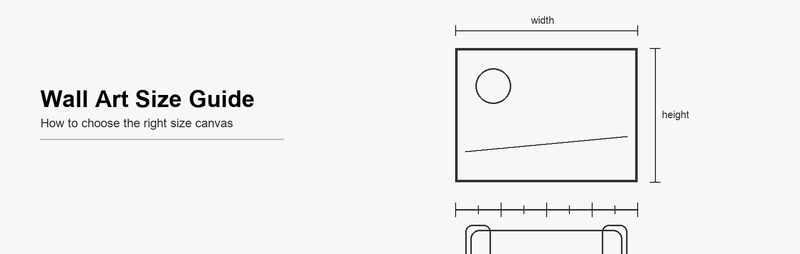
Above furniture, span about two thirds the width of what sits below and leave 6 to 8 inches of clear wall between them. On a bare wall, center the piece 57 to 60 inches from the floor. Full measurements are in the wall art size guide.
Every piece is offered as a single canvas or as a multi-panel set. Skylines and bluebonnet fields split well. Keep a single landmark as one canvas, because a panel gap through the Alamo's facade looks like damage rather than design.
A living room or a study suits the city work, especially above a sofa or a media unit where the width matches the furniture, which has its own set of rules.
Bluebonnets suit a bedroom or a kitchen, where the blue and green read as fresh rather than as scenery. The night skylines need a lit wall, since a dark image with small bright windows disappears in a dim room.
Start with Texas Wall Art. For the same shape in other cities, Skyline Wall Art and the wider City Wall Art.
For the nearest comparison in another American city, Chicago Wall Art. For the format a skyline really wants, Panoramic Wall Art, and for the hour most of these were shot in, Sunset Wall Art.
For placing a wide piece, see living room wall art ideas.
Quick answers
Artwork with Texas as its subject, in two distinct forms. Symbol work uses the state outline, the Lone Star flag, longhorns and boots, and reads as a statement of belonging. Place work photographs somewhere real: Dallas, Austin, San Antonio, the Alamo or the Hill Country.
They suit different rooms. Dallas is a dense cluster of glass towers with Reunion Tower and reads as a big-city skyline. Austin is lower and greener, with the Capitol dome and river bridges, so it is half landscape. San Antonio leads with the Tower of the Americas and the Alamo.
Yes. Bluebonnets bloom for a short window in spring, so the photographs are unmistakably April. They also bring a strong blue and green into a room rather than the warm ochre most people expect from Texas imagery. Worth knowing before hanging one in a year-round space.
Skylines want width, because the subject is a horizontal run of buildings and a square crop turns it into a fragment. Single landmarks such as the Alamo or the Capitol hold up square or upright. Above furniture, span about two thirds the width of what sits below.
The photographic ones do. Weathered fabric, cracked paint and a folded flag with light across it read as muted texture, close to an abstract, and sit easily beside neutral furniture. A flat graphic flag is a bold block of red, white and blue and dominates instead.
Shop this guide
Every collection this guide mentions. Each one opens on artwork printed to order on museum-quality canvas.
Pieces shown above
Every piece this guide shows, printed to order on museum-quality canvas.
Keep reading
Guides that pick up where this one stops.