

WEEKEND SALE! • EXTRA 10% OFF + FREE SHIPPING DEAL | CODE: WEEKEND10
WEEKEND SALE! • EXTRA 10% OFF + FREE SHIPPING DEAL | CODE: WEEKEND10

Yellow wall art usually comes from the hour rather than the object. Low sun at dawn and dusk turns sky, water, stone and forest yellow for about an hour twice a day, and that is where most yellow in photography originates. Sunflowers are the exception, not the rule.
The difference decides how a piece behaves. Yellow made from light spreads across the whole frame and warms everything in it. Yellow made from an object sits in one place and stays there.

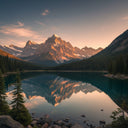
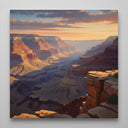
At low sun the light itself is yellow, so every surface it touches picks the color up. A sunset landscape is yellow in the sky, gold on the water and warm on the rock, all at once. Nothing in the frame escapes it.
A sunflower field is the opposite. The yellow is concentrated in the flowers, the sky above stays blue and the soil stays brown. On a wall the first reads as warmth and the second reads as a color accent. Choose by which job the room needs. Yellow Wall Art holds both and Sunset Wall Art narrows it to the light.

Bright primary yellow is rare in photography and difficult in a room, because it is the lightest and most reflective color on the wheel and it flattens anything near it. The shades that work are the dulled ones.
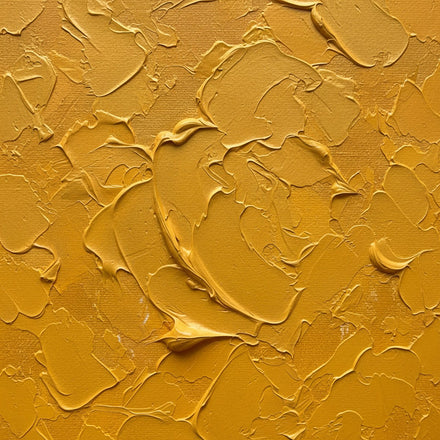
Mustard is yellow with brown and green in it, which is why it sits so well against navy and forest green. Ochre is an earth pigment, yellow with red and clay, and it is the most forgiving of the three in a warm room. Gold is yellow with weight, usually from metal or low sun on water. Mustard Wall Art, Ochre Wall Art and Gold Wall Art separate them.

Deep cool colors. Navy, charcoal and forest green all sit far enough from yellow in both hue and value that the artwork reads as intentional rather than accidental.
Against a warm white or cream wall a yellow piece works too, but it needs internal contrast to hold, so choose an image with a dark treeline, a silhouette or deep shadow in it. The pairing that reliably fails is yellow art on a yellow or bright cream wall, where the two merge and the piece loses its edges. The paint color guide covers reading a wall before buying for it.

Beyond golden hour, three subjects supply real yellow. Sunflower fields, which are the strongest and most literal. Autumn foliage, where birch, aspen and oak turn yellow before they turn red. And city light at night, where sodium and window light read as warm yellow against a dark sky.
The night version is the most underrated of the three. A lit skyline gives yellow in small bright points on a dark ground, which is the highest contrast form of the color available and the easiest to place in a modern room. Autumn Season Wall Art holds the second, and the night version sits throughout the city and skyline photography.
Yellow raises the apparent light level of a room, so it earns its place where the natural light is poor. A north facing room, a hallway with no window or a stairwell all gain more from a yellow piece than a bright south facing living room does.
A bathroom needs one caveat before the color question. No canvas is engineered for a steam room, so it goes on the wall furthest from the shower, outside the direct spray, in a room where the extractor works; the bathroom guide covers that in full. In a hallway, a long panoramic piece at 36 x 12 to 73 x 24 inches suits the proportion better than a standard rectangle. The living room guide covers placement where light is already good.

The two thirds rule applies as usual: size the piece to about two thirds the width of the furniture below it, so roughly 48 inches above a 72 inch sofa, with the center 57 to 60 inches from the floor.
The caution is saturation rather than size. A large piece of golden hour landscape is easy to live with because the color is graded and broken by shadow. A large piece of flat saturated yellow is not, and it will set the temperature of every other surface in the room. If the yellow in an image is unbroken, go smaller or choose a vertical piece at 12 x 24 to 24 x 49 inches. The sofa sizing guide has the measurements.
Quick answers
Deep cool colors give the cleanest result: navy, charcoal and forest green all contrast with yellow in both hue and value. Warm white and cream also work if the artwork has internal contrast such as a dark treeline. Yellow art on a yellow or bright cream wall merges and loses its edges.
Mustard is yellow with brown and green in it, which makes it sit well against navy and forest green. Ochre is an earth pigment, yellow with red and clay in it, so it is warmer and more forgiving in a room that already has wood and terracotta.
Low sun. For about an hour after sunrise and before sunset the light itself is yellow, so it warms every surface in the frame at once. Object yellow, such as a sunflower or a taxi, stays in one place. Light yellow spreads and warms a room, object yellow works as an accent.
It is one of the better choices there. Yellow raises the apparent light level, so a north facing room, an interior hallway or a stairwell gains more from it than a bright room does. Choose an image with light in it rather than a flat yellow block, so the piece reads as illuminated.
About two thirds the width of the furniture below, so near 48 inches above a 72 inch sofa. If the yellow is graded and broken by shadow, take the full size. If it is flat and saturated across the whole frame, go smaller or choose a vertical piece, since unbroken yellow at scale sets the temperature of the room.
Shop this guide
Every collection this guide mentions. Each one opens on artwork printed to order on museum-quality canvas.
Pieces shown above
Every piece this guide shows, printed to order on museum-quality canvas.
 Sunset Over Hilly Mountains Canvas Wall ArtFrom $69.95
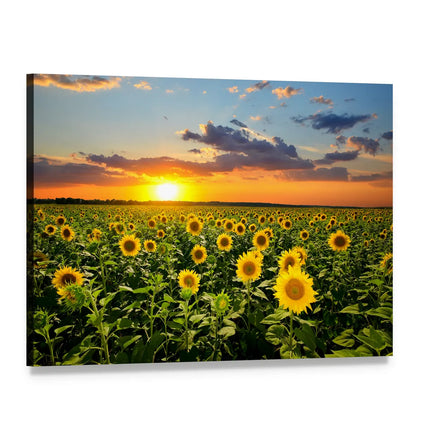 Sunflower Field at Sunset Canvas Wall ArtFrom $69.95
 Yellow Trees Foliage and Rocks in Forest Canvas Wall ArtFrom $69.95
 Sunrise Over Portland Skyline with Mount Hood Canvas Wall ArtFrom $69.95
 Serene Oak Tree in Autumn Light Canvas Wall ArtFrom $69.95
Keep reading
Guides that pick up where this one stops.