

MONDAY SALE! • EXTRA 10% OFF + FREE SHIPPING DEAL | CODE: MONDAY10
MONDAY SALE! • EXTRA 10% OFF + FREE SHIPPING DEAL | CODE: MONDAY10
Japandi wall art is art chosen for a room that blends Japanese minimalism with Scandinavian warmth: muted natural color, calm subjects, and a lot of empty space left deliberately empty. It works by restraint rather than by impact, which is the opposite of how most wall art is selected.
This collection holds pieces filtered to that brief. Misty and foggy landscapes are the largest group at about 46 percent, mountains about 30 percent, lakes and rivers about 30 percent, woodland about 23 percent, still water about 20 percent, lone or bare trees about 14 percent, and botanical close-ups about 11 percent.
Japandi is a portmanteau of Japanese and Scandinavian, and it describes an interior style that takes the discipline of one and the warmth of the other.
From Japan it takes ma, the value placed on empty space, along with low furniture, natural materials and an intolerance for clutter. From Scandinavian design it takes light woods, soft textiles and the warmth associated with hygge. The result is a room that is spare without being cold, which is the specific problem japandi exists to solve.
The style is often traced to the long exchange between the two traditions rather than to a single designer, and it became a named trend in interiors during the late 2010s.
Four things, and a piece usually needs all four.
Muted, natural color. Sand, warm white, beige, clay, sage, soft charcoal, muted green and grey-blue. Saturated color breaks the scheme faster than any other mistake.
A calm subject. Fog, still water, a single tree, a leaf, a stretch of grass. Nothing dramatic, nothing narrative, nothing that demands to be explained.
Negative space inside the frame. This is the part most often missed. A japandi piece is composed around emptiness, so a photograph packed edge to edge with detail is not japandi even if its palette is right.
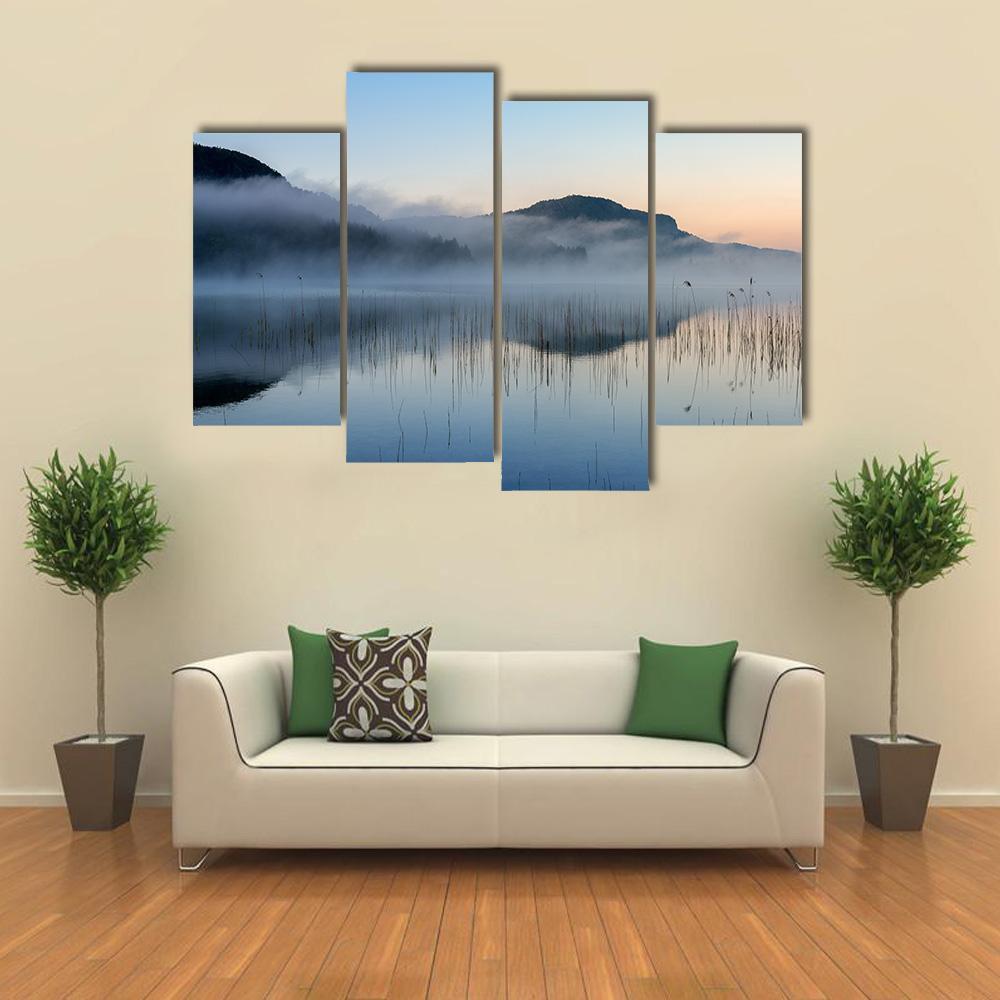
Low contrast. Soft transitions rather than hard edges. Mist does this naturally, which is why misty landscape is the single largest group here.
Minimalism alone is not enough. A stark black and white graphic is minimal and not japandi, because it lacks warmth and softness.
Nearly half this collection is misty or foggy, and that is not an accident of selection.
Fog does three japandi things at once. It flattens contrast, so the image reads soft. It erases detail, which manufactures the empty space the style is built on. And it reduces a scene to a few overlapping shapes, which is the same simplification a Japanese ink painting performs deliberately.
The practical consequence is that a misty landscape carries japandi character even when the underlying subject, a mountain range or a forest, would otherwise be too busy.
About 14 percent of the collection is a lone or bare tree, and about 11 percent is a botanical close-up: dandelion seed heads, single leaves, branches, ferns and grasses.
These are the most literally japandi images here. A single tree in an otherwise empty field is a composition almost entirely made of negative space. A dandelion seed head against a plain ground is the photographic equivalent of the botanical line drawings the style is known for.
Bare and leafless trees are worth seeking out specifically. Without foliage a tree becomes line rather than mass, which is exactly the quality japandi borrows from ink drawing.
Lakes and rivers run to about 30 percent of the collection and still or calm water to about 20 percent, with considerable overlap between them.
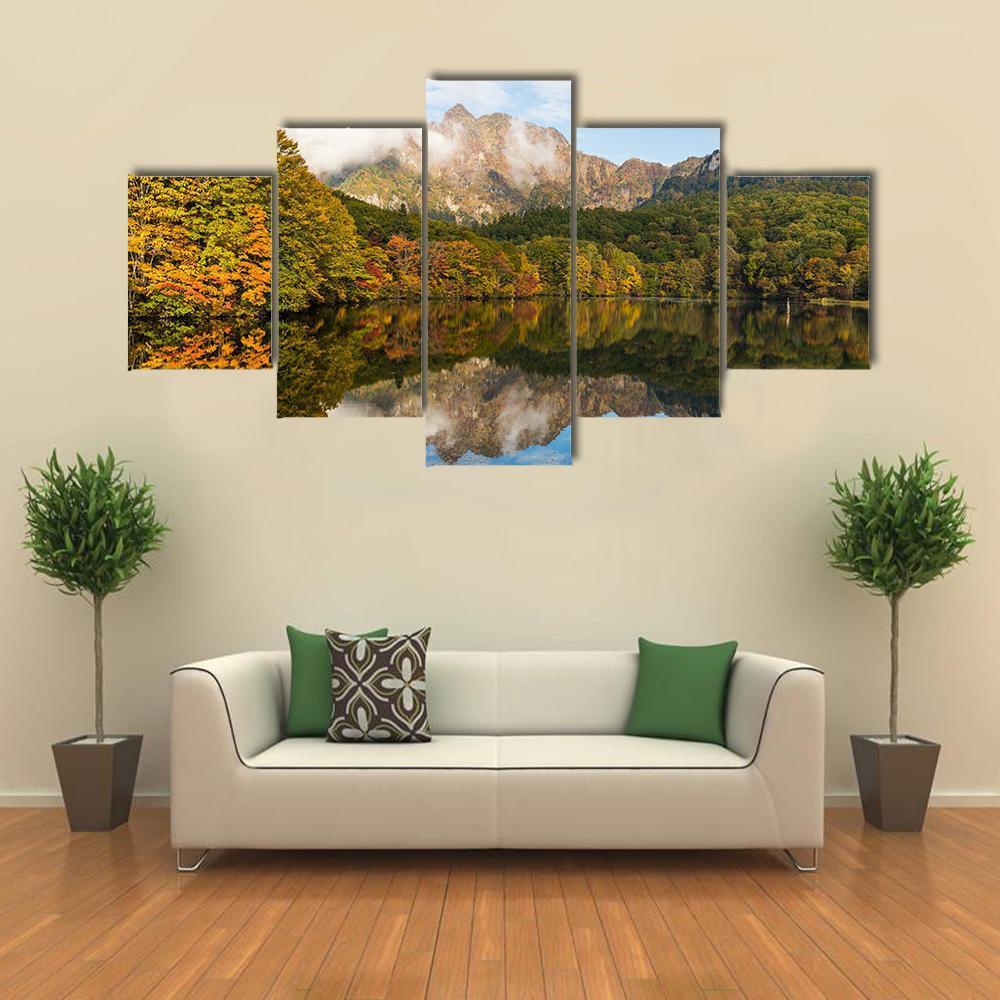
Still water is useful in a japandi room for the same reason mist is. A reflection halves the visual information in a scene by repeating it, and a flat calm surface reads as an empty plane. Both produce quiet.
Bamboo, at about 4 percent, and sand dunes at about 3 percent, are the smallest groups here but the most explicitly Japanese and Scandinavian in feel respectively.
They overlap and they are not the same thing.
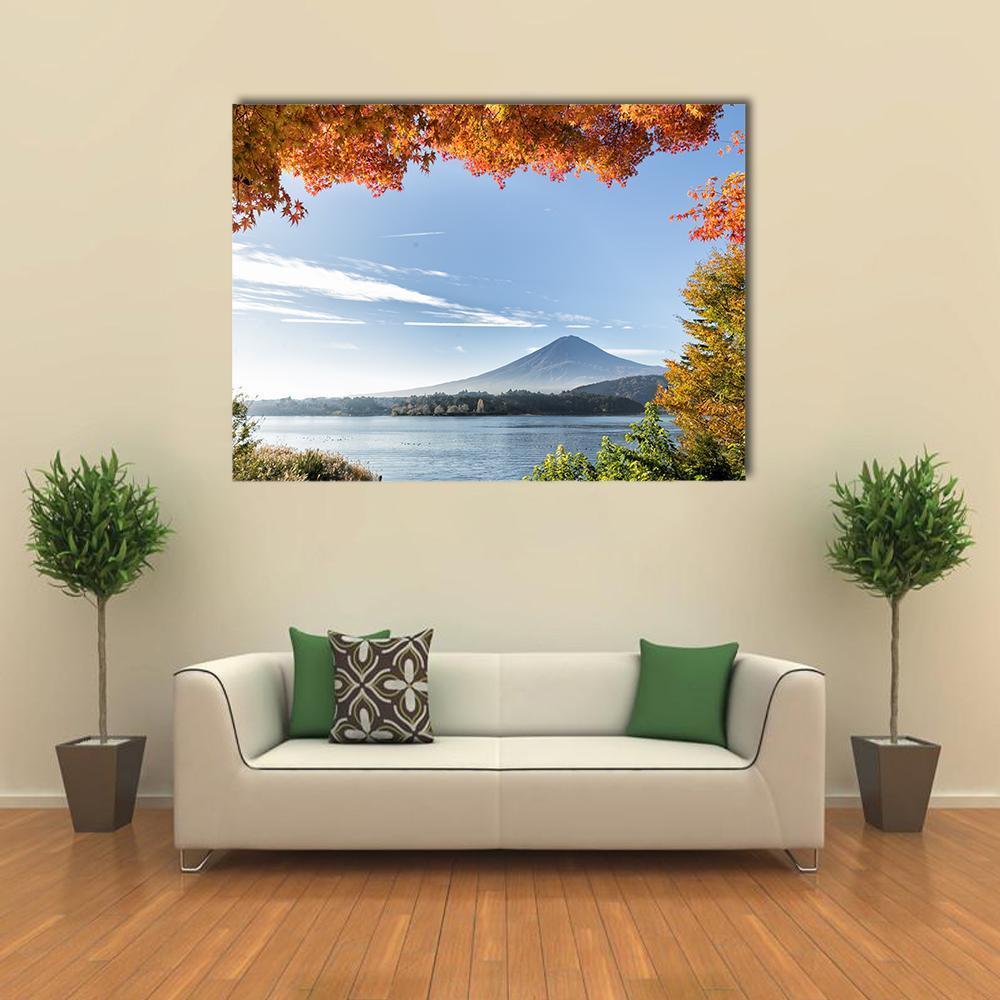
Japanese wall art is defined by subject: Mount Fuji, temples, torii gates, cherry blossom, the places and symbols of Japan. It can be bold, saturated and busy, as a Tokyo night skyline is.
Japandi wall art is defined by mood and palette rather than by place. A misty Norwegian cliff and a Scottish loch belong in it; a neon Tokyo street does not, despite being unambiguously Japanese.
If you want the country, see Japanese wall art. If you want the feeling, this is the collection. The quiet Japanese subjects, bamboo paths and misty gardens, sit in both.
Hang fewer pieces than you think. Japandi depends on wall space staying visible. A dense gallery wall contradicts the style no matter how well chosen the individual pieces are. One piece per wall, or two with generous separation.
Leave more space around each piece. The empty wall is part of the composition, in the same way the empty area inside the frame is.
Go larger, not busier. If a wall feels underfilled, the japandi answer is a bigger piece with the same restraint, never more pieces or a more detailed one.
Watch the wall color. These are low-contrast images and they can vanish on a very pale wall. A wall with some depth, clay, greige, soft charcoal or a muted green, holds them better than bright white.
For the broader minimal look beyond this palette, see minimalist wall art.
Every piece here is printed to order on museum-quality canvas with archival inks that resist fading, stretched over a solid wooden inner frame, and shipped ready to hang. Shipping within the United States is free, and returns are free for 30 days in the United States, United Kingdom, Australia and Canada.
Japandi wall art is art suited to interiors that blend Japanese minimalism with Scandinavian warmth. It uses muted natural color such as sand, beige, clay, sage and soft charcoal, calm natural subjects, low contrast, and generous empty space inside the frame. It aims to create a calm room through restraint rather than through bright color or dense detail.
Japandi is a portmanteau of Japanese and Scandinavian. It takes the discipline of Japanese design, including the value placed on empty space, natural materials and an absence of clutter, and combines it with the light woods, soft textiles and warmth of Scandinavian interiors. It became a named interior trend during the late 2010s.
Muted and natural: sand, warm white, beige, clay, sage green, muted grey-blue and soft charcoal. Saturated color is what breaks a japandi scheme fastest, so bright red, orange, hot pink and vivid turquoise sit outside the style even in an otherwise calm image.
Japanese wall art is defined by subject, meaning Mount Fuji, temples, torii gates and cherry blossom, and it can be bold and saturated. Japandi is defined by mood and palette rather than place, so a misty Norwegian cliff qualifies while a neon Tokyo street does not. Quiet Japanese subjects such as bamboo paths and misty gardens belong to both.
Fewer than in most styles. Japandi depends on visible wall space, so a dense gallery wall works against it however good the individual pieces are. One piece per wall, or two with generous separation, is the usual answer. If a wall looks underfilled, use a larger piece rather than more pieces.