

FRIDAY SALE! • EXTRA 10% OFF + FREE SHIPPING DEAL | CODE: FRIDAY10
FRIDAY SALE! • EXTRA 10% OFF + FREE SHIPPING DEAL | CODE: FRIDAY10

Spa wall art has a narrower brief than the artwork in any other room. The image has to lower a pulse rate rather than hold attention, which means almost everything that would make a picture interesting somewhere else works against it here.
Water does most of the work, and that is measurable rather than a matter of taste: water, waterfalls and still lakes make up the largest part of this range by a wide margin.

The two behave differently and suit different rooms. Still water, a lake with a clean reflection, mist on the surface, reads as quiet and slow. It suits a treatment room, a massage room or anywhere someone is lying down.
Moving water, a waterfall or a stream over rock, reads as fresh and active. It suits a reception, a corridor or a changing area, where people are upright and moving through. Choosing the wrong one is why a waterfall sometimes feels wrong above a treatment bed. Spa Wall Art holds both, and Waterfall Wall Art narrows it to the moving half.

A common mistake is to strip all color out and hang something near white, which reads as clinical rather than calm. The quality that actually produces calm is low contrast: no hard black, no bright highlight, a narrow tonal range.
Mist is the reliable way to get it, because it compresses the whole scene into a few close tones. A misty lake at dawn can be quite green and still read as restful, while a high contrast black and white shot of the same lake does not. Lake Wall Art holds the still water end.

Anything a viewer has to interpret pulls attention rather than releasing it. A person, an animal, a building, a recognizable landmark, a piece of text: each one makes the mind do work.
What is wanted instead is a surface. Water, stone, mist, foliage at a distance, sand. The eye can rest on those without resolving them into anything, which is exactly the point. It is the one room where a slightly boring image is the correct choice.

This is the detail most treatment rooms miss. If a client spends the session face up, the wall opposite the door is the least useful surface in the room and the ceiling is the most.
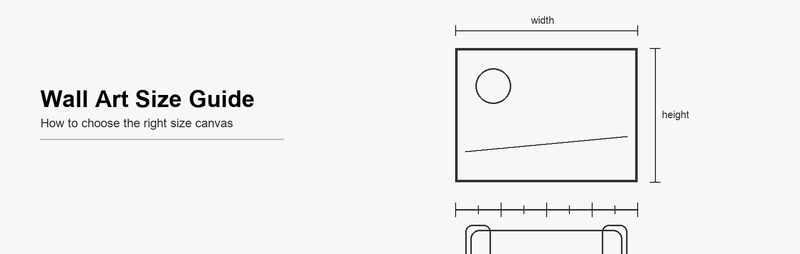
Hanging is not the answer there, for obvious safety reasons, but the wall at the foot of the bed is, and it should be hung lower than any standard: around 48 to 52 inches to the center, so it sits in the sight line of someone reclining rather than standing. In a reception area use the normal 57 to 60 inches. The size guide covers the measuring method.
Spa rooms run warm and damp, and this needs saying plainly: no canvas is engineered for a steam room. A canvas is fabric on a solid wooden inner frame, and sustained steam is not what it is built for.
That does not rule the room out, it decides the wall. Keep artwork out of a steam room, a sauna and a wet room entirely. In a treatment room or reception, hang it on the wall furthest from any water source, out of direct spray, in a space with working ventilation. The bathroom placement guide covers the same reasoning for a home.

Water is horizontal. A lake, a shoreline or a stream continues past both edges of the frame, so a wider piece reads more naturally and gives the eye further to travel before it stops.
Horizontal work runs 1 Piece, 3 Horizontal, 4 Pop, 5 Star and 5 Pop from 24 x 16 to 82 x 42 inches, and panoramic covers 36 x 12 to 73 x 24, which suits a treatment room wall unusually well because it is wide and low and does not loom over a reclining client. Multi panel also works here, since still water has no detail for the seams to interrupt. The multi panel comparison covers the trade.
Quick answers
Water above everything else, which is the largest group in the category by a wide margin. Still water such as a lake with a clean reflection suits treatment rooms where people are lying down; moving water such as a waterfall suits reception and corridors where people are upright and moving.
Not necessarily, and stripping the color out often reads as clinical rather than calm. The quality that produces calm is low contrast: no hard black, no bright highlight, a narrow tonal range. A misty lake can be quite green and still be restful.
No. No canvas is engineered for a steam room, and sustained steam is not what fabric on a wooden frame is built for. Keep artwork out of steam rooms, saunas and wet rooms entirely, and in treatment rooms hang it on the wall furthest from water with working ventilation.
Lower than standard. If a client spends the session face up, hang on the wall at the foot of the bed with the center around 48 to 52 inches, so it sits in a reclining sight line rather than a standing one. Use the normal 57 to 60 inches in reception.
Anything the viewer has to interpret: people, animals, buildings, recognizable landmarks and text all make the mind do work. What is wanted is a surface the eye can rest on without resolving it, such as water, stone, mist, distant foliage or sand.
Shop this guide
Every collection this guide mentions. Each one opens on artwork printed to order on museum-quality canvas.
Pieces shown above
Every piece this guide shows, printed to order on museum-quality canvas.
 Misty Bierstadt Lake Reflection Canvas Wall ArtFrom $69.95
 Stream in Green Forest Canvas Wall ArtFrom $69.95
 Halong Bay Limestone Karsts with Reflections Panoramic Canvas Wall ArtFrom $98.95
 Waterfall in the Green Forest Canvas Wall ArtFrom $69.95
 Sand Harbor Lake Tahoe Landscape Canvas Wall ArtFrom $69.95
Keep reading
Guides that pick up where this one stops.