





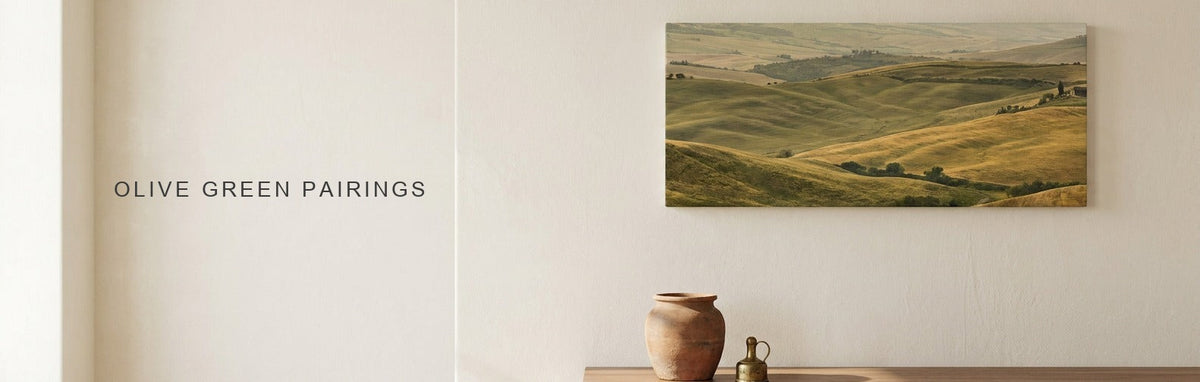
What Colors Go With Olive Green
What colors go with olive green: warm cream and off-white, terracotta and rust, mustard and ochre, deep brown and tan leather, and brass or gold metal. Olive is a muted, yellow-leaning green, so it behaves like a warm neutral and pairs with other warm tones rather than with cool ones.
That yellow undertone is the whole thing. It is what separates olive from sage, and it is why pairings that flatter sage can leave olive looking muddy.

Olive is warm, sage is cool, and they need different partners
Sage is a green softened with grey. Olive is a green pushed toward yellow and brown. Put them side by side and the difference is obvious; describe them in words and they sound like the same color.
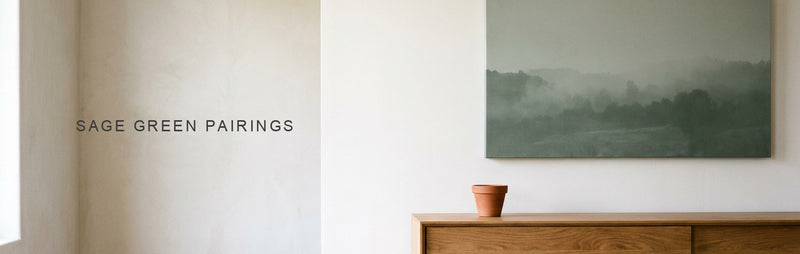
The practical consequence: sage takes cool white and muted navy comfortably, while olive wants cream, brown and brass. Our sage green pairing guide covers the other half, and sage, olive or emerald separates the three greens people mix up most.

Cream and off-white before pure white
Pure white beside olive reads cold and makes the green look dull, because the white has no warmth to meet the yellow in the olive. Cream, bone and warm off-white all restore the relationship: the warmth lifts the green and the green stops the cream reading yellow.
This is the safest pairing in the list and the one to reach for when the room is otherwise undecided.

Terracotta and rust are the contrast that works
Green and red-orange sit opposite each other on the color wheel. At full saturation that is hard to live with; muted on both sides it becomes one of the most reliable combinations in interiors. Olive against terracotta gives complementary contrast without the vibration.
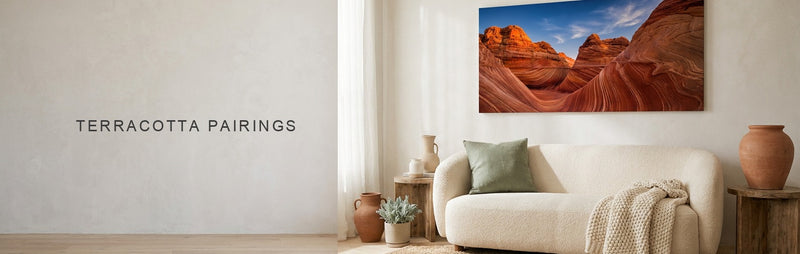
Rust, clay and burnt sienna all do the same job. The terracotta pairing guide approaches the same relationship from the other side.
Mustard and ochre extend the undertone
Because olive already contains yellow, mustard and ochre read as a deeper version of the same note rather than as a second color. That makes them an analogous pairing: low contrast, warm, and easy to layer through cushions and throws.
Use them when the room needs richness rather than contrast. Against a large olive piece, a mustard accent reads as considered; a bright yellow one reads as an accident.

Brown and leather are the structural partner
Olive and brown share the same earth base, which is why olive appears constantly beside tan leather, walnut and worn wood. The pairing carries no tension at all, so it is the one to use when the wall art is the loudest thing in the room and everything else should recede.
Brass and gold hardware belong in the same group. Chrome and cool silver are the metals to avoid here; they pull against the yellow and make olive look grey.
The pairings that fail
Cool grey is the first, for the same reason it fails with sage: it removes the warmth olive depends on. Pure black is the second, because olive is a low-contrast color and black overwhelms it, flattening the green toward brown.
Bright, saturated green is the third. Next to a true green, olive looks faded rather than sophisticated, which is the opposite of why anyone chooses it.

What to browse
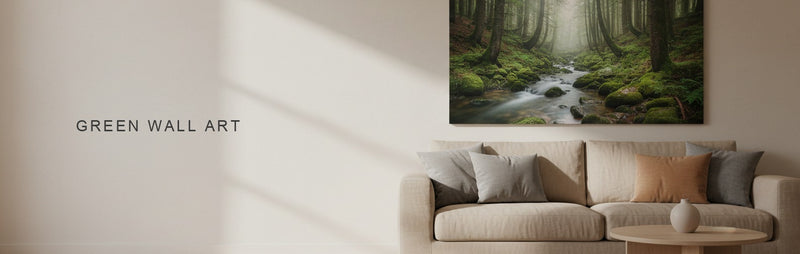
For the green pieces themselves, Green Wall Art is the wide range and Sage Green Wall Art is the greyer neighbor. For the pairing partners, Beige Wall Art and Brown Wall Art cover the warm neutral half, and Burnt Orange Wall Art covers the terracotta contrast.
Quick answers
Common Questions
What colors go with olive green?
Warm cream and off-white, terracotta and rust, mustard and ochre, deep brown and tan leather, and brass or gold metal. Olive is a yellow-leaning green that behaves like a warm neutral, so it pairs with warmth rather than with cool tones.
What is the difference between olive and sage green?
Undertone. Sage is a green softened with grey and leans cool. Olive is a green pushed toward yellow and brown and leans warm. They sound alike described in words and look obviously different side by side, and they need different partners.
Does olive green go with grey?
Poorly, if the grey is cool. Cool grey strips out the warmth that makes olive read as olive, and the result looks muddy rather than muted. A warm greige works, because it reintroduces the yellow note the pairing needs.
What metal finish suits olive green?
Brass, gold and antique bronze. All three share the yellow undertone and read as part of the same palette. Chrome and cool silver pull against it and can make olive look grey and tired.
Does olive green work with black?
Not usually. Olive is a low-contrast color and black overwhelms it, flattening the green toward brown. Deep brown gives the same anchoring weight while keeping the warmth, which is what olive depends on.
Shop this guide
The collections in this guide
Every collection this guide mentions. Each one opens on artwork printed to order on museum-quality canvas.
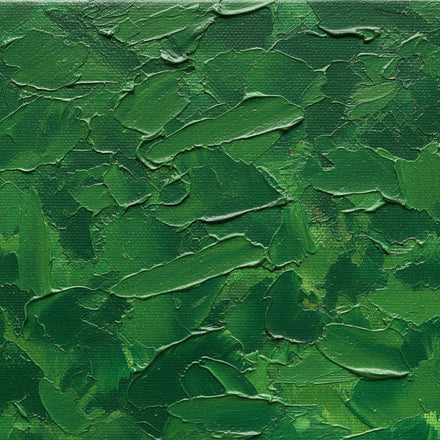


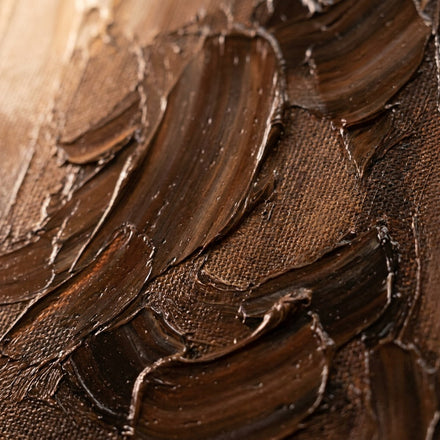

Pieces shown above
The pieces in this guide
Every piece this guide shows, printed to order on museum-quality canvas.

Keep reading
Read next
Guides that pick up where this one stops.